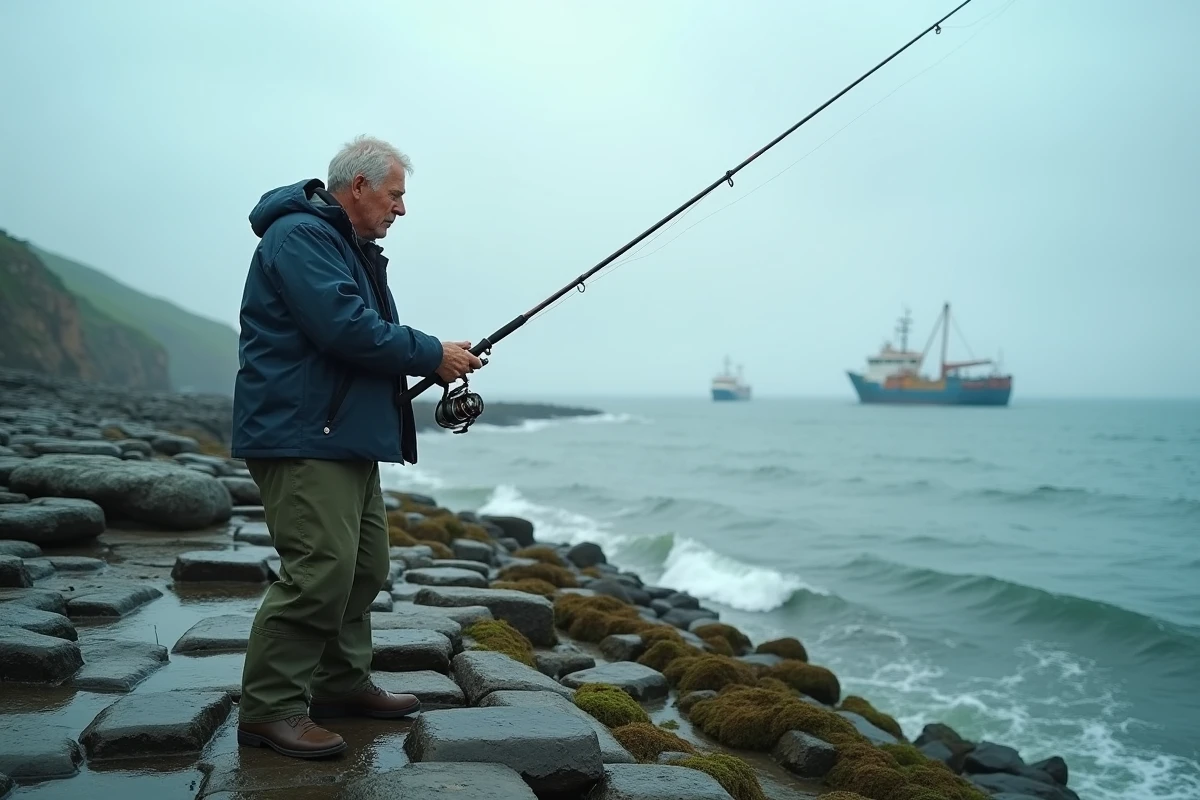
Shore fishing in Guilvinec is not limited to the port’s jetties. The most productive spots are located on rocky areas exposed to currents, often overlooked by passing fishermen who focus on easy access points. Here, we detail the terrain configurations, tide windows, and technical approaches that make a difference in this part of Bigouden country.
Reading the Terrain: Identifying Productive Rocky Spots in Guilvinec
The coastline between Le Guilvinec and the tip of Penmarc’h features an alternation of rocky flats, natural rock formations, and small sandy coves. The spots worth stopping at share one characteristic: a marked lateral current at mid-tide, creating water veins where bass lie in wait.
The rocky points extending out to sea remain the most consistent spots. Their appeal lies in their inaccessibility for coastal boats, which cannot work these cluttered bottoms without the risk of snagging. Shore fishermen thus benefit from less pressure than in open areas.
We recommend scouting the spots at low tide during spring tides before any session. The cracks, corridors between two boulders, and steep drops become visible at that time. Take photos of them: this personal mapping is worth more than a shared GPS spot on social networks.
To know where to fish from the shore in Guilvinec based on your level and target species, cross-referencing terrain data with tide coefficients remains the most reliable method.
Tide Coefficients and Time Slots for Shore Bass
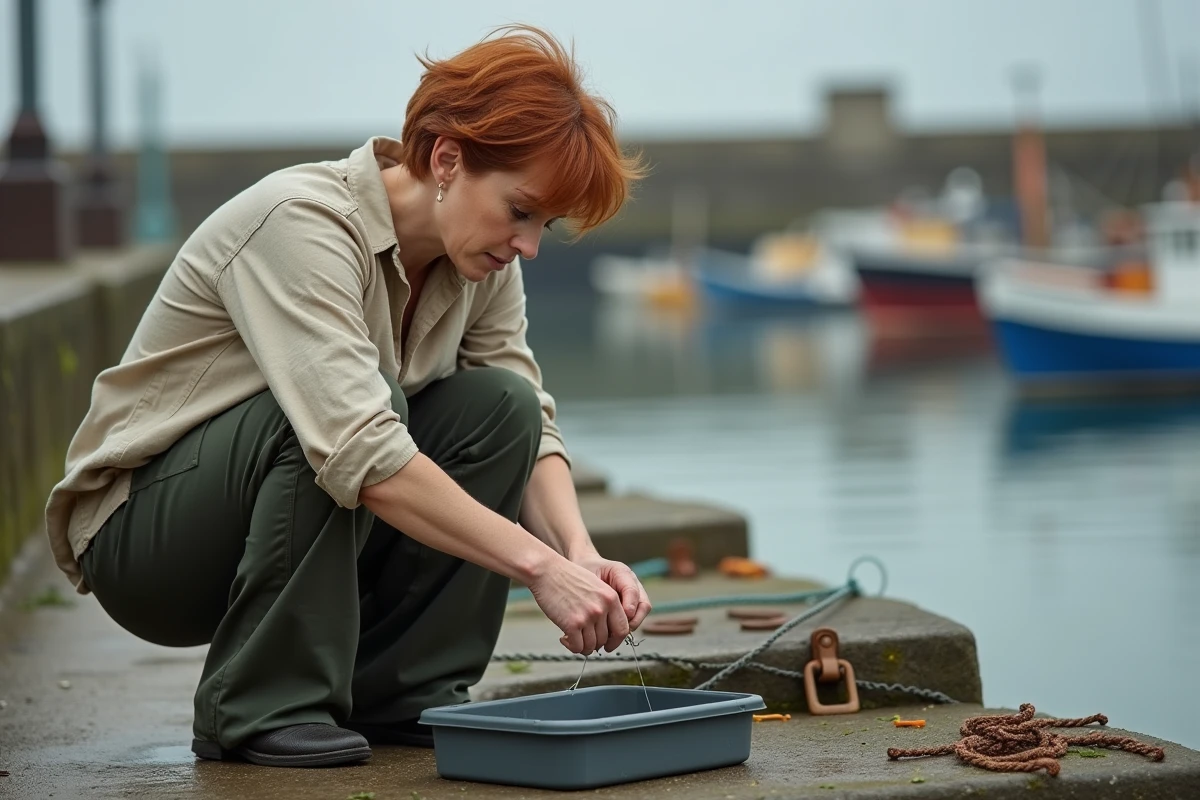
Not all coefficients are equal in this area. Tides with average coefficients, between 70 and 90, offer the best fishing windows from the rocks. Very high coefficients make some spots dangerous and shorten the exploitable fishing time on the flats.
The two-hour period before and after low tide concentrates activity on the points. The incoming tide brings prey towards the rocks, and the bass follows. Conversely, at high tide, the rocky spots are often submerged and the fish disperse.
The late season, from September to November, significantly surpasses the summer period for shore bass in Guilvinec. Tourist pressure decreases, the waters become nutrient-rich after the first winds, and fish move closer to shore to hunt. Experienced fishermen from southern Finistère consider this autumn window as the true bass season from the shore.
Casting Techniques Suitable for Rocky Spots in Guilvinec
On the flats and points, soft lure fishing dominates. Shad-type lures, rigged Texas-style to minimize snags in the cracks, allow for exploring rocky corridors without losing gear on every cast.
- The soft lure in Texas rig remains the most versatile on cluttered bottoms: it passes between the boulders where a hard lure would get stuck immediately.
- Lightweight jigs, worked with slow animation near the bottom, provoke solid bites from pollock, a species abundant on the rocky drops in the area.
- The popper or stickbait on the surface works at dawn on exposed spots when bass hunts trigger along the rock edges.
- Float fishing with live bait (sand eel or small mullet) remains productive on the dikes, especially for fishermen who prefer a static approach.
The choice of weight for the lead head directly depends on the current. On spots exposed to the incoming tide, we increase weight to maintain contact with the bottom. In sheltered coves, a lighter weight and a gliding descent trigger more bites.
Target Species and Local Regulations in Southern Finistère
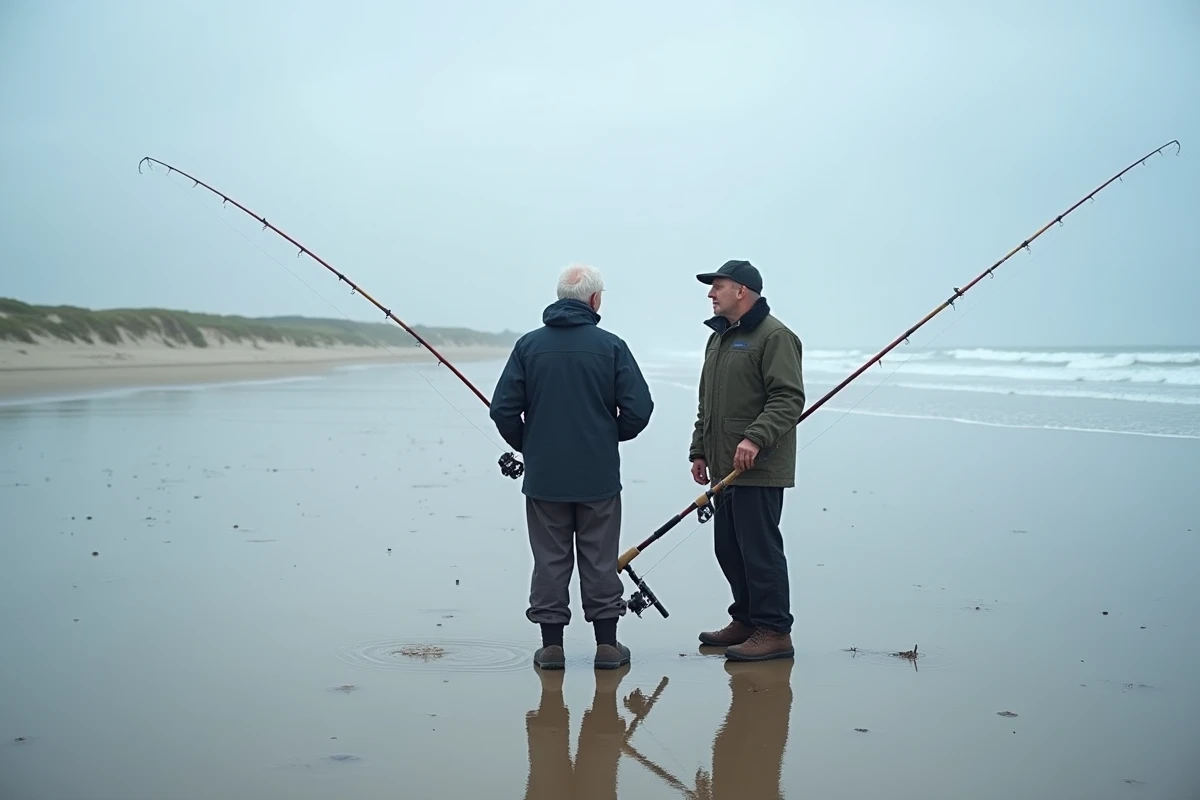
Bass (loup) is the flagship species, but the rocky spots in Guilvinec also yield pollock, wrasse, and mackerel in quantity depending on the season. Grey mullet frequents the sandy areas between the flats, accessible through light surfcasting.
The regulations for recreational bass fishing on the Atlantic coast impose strict constraints. The minimum catch size and daily quotas change regularly: check the current prefectural orders before each outing. No-kill practices are increasingly common in this area, especially in the late season when spawning bass come closer to shore.
The complementarity of sea and freshwater is an underappreciated asset of the area. Many fishermen alternate between shore sessions in Guilvinec and predator outings on nearby ponds or rivers like the Odet, Aven, or Bélon. This alternation allows for effective fishing regardless of marine weather.
Safety on the Rocks and Common Mistakes
The flats of Bigouden country are slippery. Brown algae cover the boulders as soon as the tide retreats, and a fall on these surfaces can have serious consequences. Shoes with studded or felt soles dramatically change the fisherman’s stability.
- Never turn your back to the ocean on an exposed spot: the backwash waves can surprise even in calm seas.
- Always fish with a partner on isolated spots, especially in the late season when attendance decreases.
- Check the marine weather and tide times the day before: a poorly calculated time slot can turn a good spot into a trap.
The most common mistake is to stay on an unproductive spot out of habit. On this coastline, moving fifty meters can be enough to find the active current vein. Mobility remains the primary factor for success in shore fishing in Guilvinec.