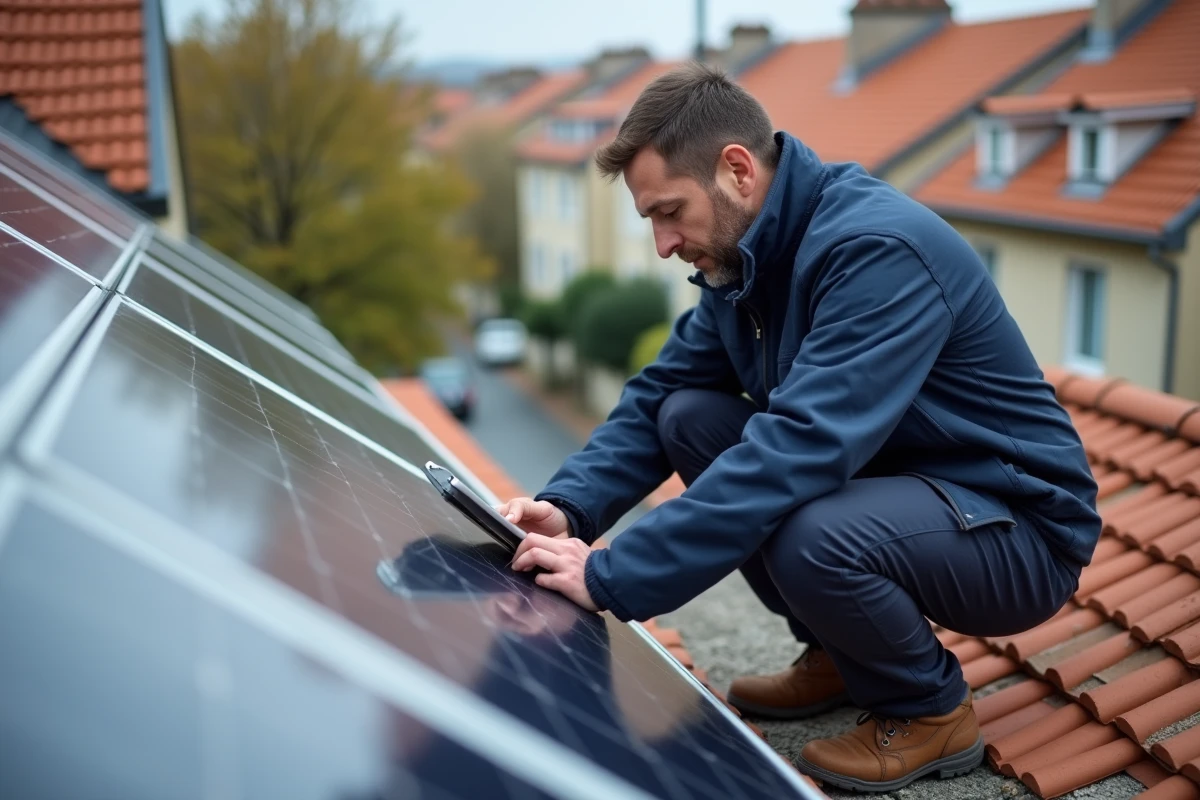
Final energy consumption stabilized in France at 1,499 TWh in 2024, after three consecutive years of decline. This shift redistributes priorities for sectors aiming for energy autonomy: residential and tertiary sectors are on the rise, while industry continues its reduction trajectory.
Microgrids and collective self-consumption: the missing piece for energy autonomy
The rise of microgrids is redefining energy management at the local level. These confined distribution networks allow a co-ownership, a housing development, or a business area to pool solar production, storage, and consumption without going through the national grid.
Their technical interest lies in the ability to manage real-time supply-demand balance over a limited area. A well-sized microgrid reduces power calls on the distribution network, limits line losses, and maximizes every kilowatt-hour of photovoltaic energy produced on-site.
We observe that the most advanced projects combine solar panels, lithium iron phosphate batteries, and predictive algorithm management. The sizing of storage remains the critical point: if undersized, it does not absorb solar production peaks during midday; if oversized, it undermines the installation’s profitability.
To keep up with regulatory and technological developments of these systems, the news on Blog Autonome gathers feedback from project leaders in collective self-consumption.
Stationary storage and next-generation batteries in France

Stationary storage conditions the viability of any energy autonomy strategy. Without temporal shifting capacity, solar or wind production remains dependent on weather variability and consumption curves.
Sodium-ion batteries are beginning to compete with lithium-ion in the residential and tertiary storage segment. Their energy density remains lower, but their manufacturing cost and the absence of cobalt or nickel in their chemistry make them attractive for installations where available volume is not a constraint.
Meanwhile, green hydrogen storage systems are maturing. The principle: convert excess renewable electricity into hydrogen through electrolysis, store it, and then reconvert it into electricity via a fuel cell. The overall efficiency remains modest compared to batteries, but the storage duration (several weeks, even seasonal) opens up prospects that lithium cannot cover.
- Lithium iron phosphate batteries: industrial maturity, high cyclability, suitable for daily management of photovoltaic self-consumption
- Sodium-ion batteries: rapidly decreasing cost, less strained raw material supply, relevant for medium-power stationary storage
- Hydrogen storage: response to the seasonal gap between summer solar production and winter consumption, still reserved for large-scale projects
Public R&D in energy: where the 2.2 billion euros from France go
French public investments in energy R&D reached 2.2 billion euros in 2024, representing a 43% increase in constant euros compared to 2019. This level places France fourth in Europe in terms of GDP share dedicated to public energy research.
The distribution of these funds sheds light on strategic choices. Nuclear and hydrogen capture a significant share of credits, supported by structuring European programs. The solar and wind sectors benefit more from private funding and production support mechanisms than from fundamental research credits.
For stakeholders in residential and tertiary energy autonomy, this orientation has a direct consequence: the expected technological breakthroughs will come from storage and conversion, not from the photovoltaic panel itself. The efficiency of crystalline silicon cells progresses in increments, while intelligent energy management architectures (EMS) and hybrid converters concentrate the margins for improvement.
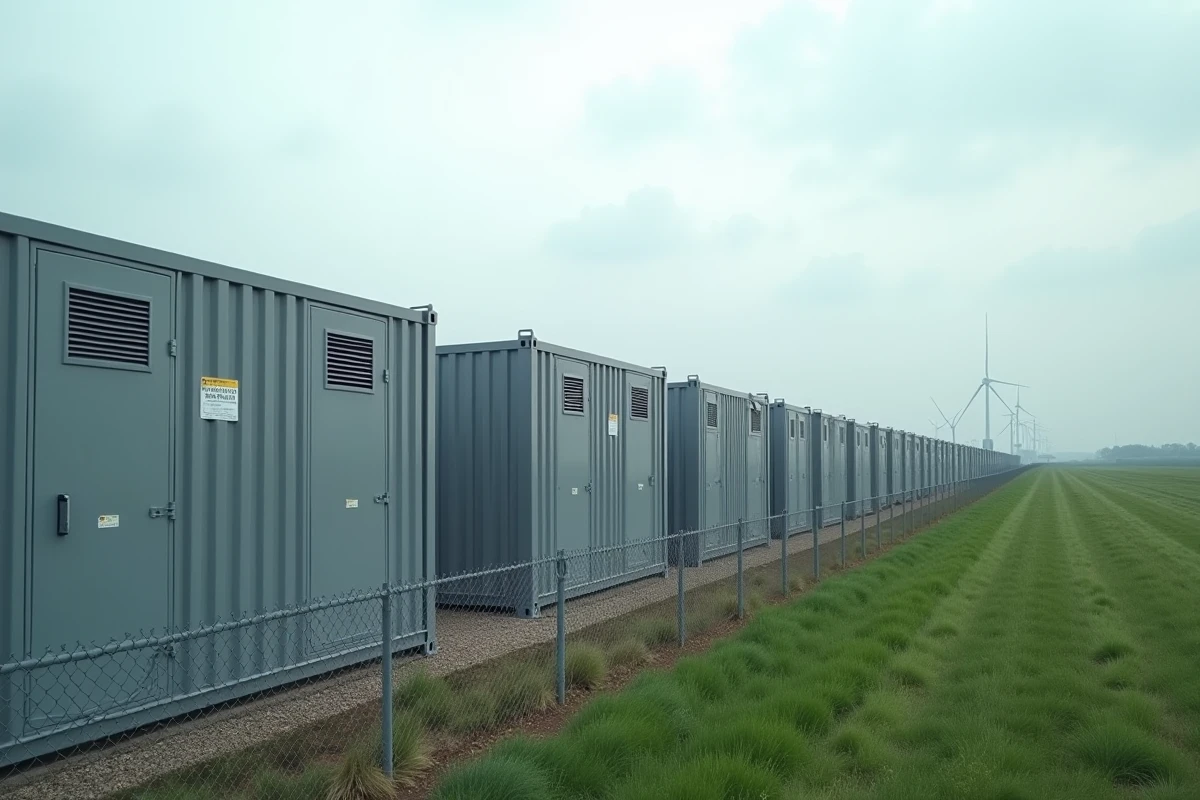
Bifacial solar panels and agrivoltaics: dual-use photovoltaic production
Bifacial solar panels capture radiation on both sides, exploiting ground or light surface reflection. On a typical residential roof, the gain remains marginal. On a ground installation with high albedo or in an agrivoltaic configuration, the surplus production can represent a significant contribution compared to an equivalent monofacial module.
Agrivoltaics illustrates a paradigm shift in French photovoltaic production. Elevated structures protect crops from water and thermal stress while generating electricity. The French regulatory framework mandates that the agricultural function remains the primary activity of the plot, which constrains the sizing of installations.
We recommend distinguishing two categories of projects:
- Roof or canopy installations, where bifacial provides limited gain but contributes to the building’s self-consumption
- Ground agrivoltaic projects, where the choice of bifacial module is fully justified by the reflection from the vegetation cover and the mounting height
- Ground-mounted plants in artificialized areas, where maximum production takes precedence and where bifacial combined with a single-axis tracker optimizes annual yield
Sectoral consumption in 2024: signals to watch for renewable sectors
Provisional 2024 data reveals contrasting dynamics. Industry has reduced its energy consumption, extending a structural trend linked to process efficiency and partial relocations. Transport remains stable, hindered by the still modest electrification of the French car fleet.
In contrast, the residential and tertiary sectors show an increase. The tertiary sector grew by 2% and the residential sector by 1%, raising questions about the ability of energy efficiency devices to offset the rebound effect linked to the digitization of uses and air conditioning.
This sectoral divergence strengthens the argument for decentralized energy autonomy. Tertiary and residential buildings that produce and store their own solar electricity reduce their exposure to these fluctuations in overall consumption while alleviating the burden on a distribution network designed for downward flows.
The French trajectory towards energy autonomy is not just about installing more photovoltaic panels. It relies on the interplay between local production, suitable storage, and intelligent management, three links whose technological maturity progresses at different rates.