In most French departments, watering ornamental gardens is now subject to prefectural restrictions for several months a year. The decrees frequently prohibit the use of hoses during the day, limiting watering to dawn or evening. This regulatory framework alters the planning for anyone wishing to maintain a vibrant garden from January to December, as the growing calendar now incorporates legal constraints on water access as well as climatic conditions.
Living soil and mulching: the foundation of a productive garden all year round
A compacted or depleted soil makes every gardener’s action less effective, regardless of the season. Before planning sowing and pruning, one must take care of the soil itself.
Improving soil structure starts with a regular supply of organic matter: homemade compost, pruning chips, decomposed leaves. These materials nourish the soil fauna (earthworms, microorganisms) that naturally aerate the soil. A biologically active soil retains water better and releases nutrients gradually, which reduces the need for chemical fertilizers.
Permanent mulching is the most cost-effective action in the garden. A layer of organic mulch (straw, miscanthus, bark) maintained throughout the year limits evaporation, slows the growth of weeds, and protects roots from winter frost as well as summer heat. Several municipalities and experimental gardens have indeed abandoned bare soil in favor of continuously covered soils, with measurable results on water consumption.
To delve deeper into these techniques adapted to the current climatic context, you can learn more on Conseil Jardinage and the approaches they regularly document.
Watering restrictions: adapting your garden to summer regulations
Since summer 2026, traditional daytime hose watering has become illegal in many French territories for several months. The prohibited hours often cover the 8 AM – 8 PM range, leaving only dawn and late evening for watering.
This constraint encourages a rethink of the very composition of the garden. Water-intensive annual beds (petunias, impatiens, begonias) become difficult to maintain without infringing the rules. In contrast, drought-resistant perennials like salvias, sedums, or verbenas adapt to reduced or even zero watering once established.
Food garden: a special status
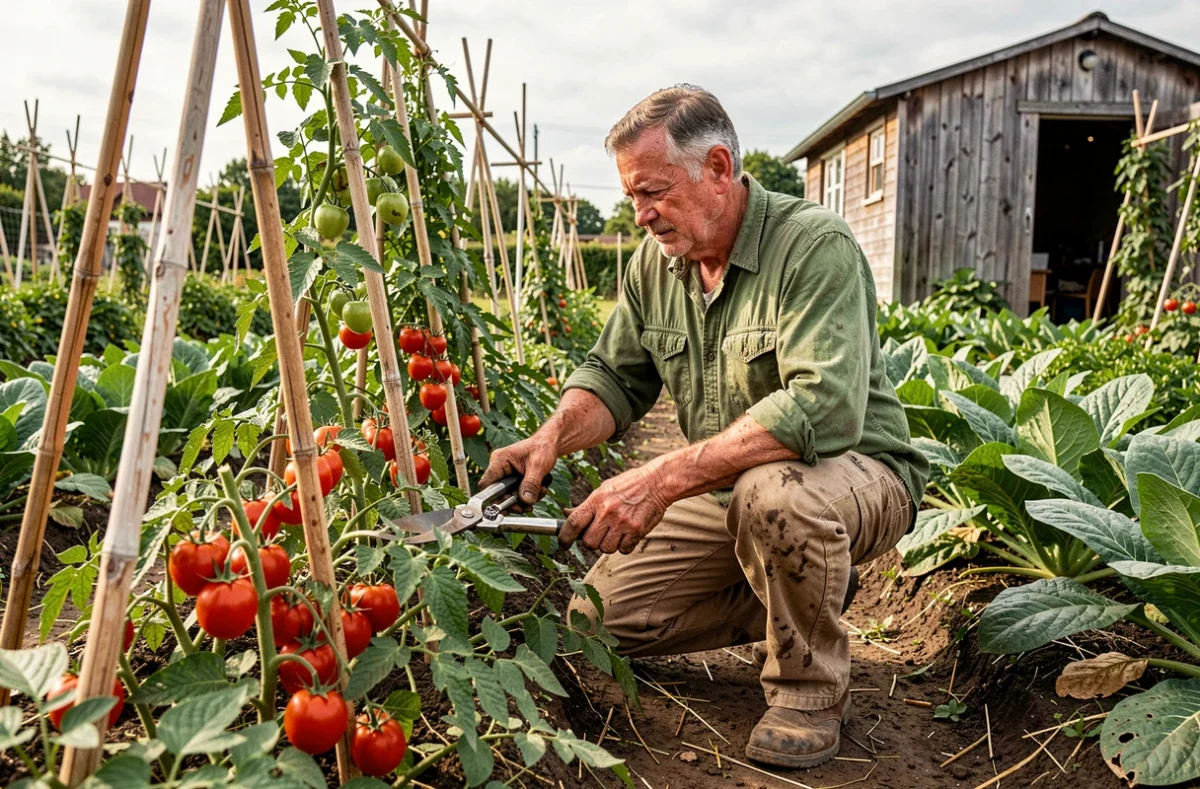
Prefectural decrees generally distinguish between ornamental gardens and food gardens. The latter often enjoys a broader tolerance, with watering remaining permitted even during restrictions for food crops. This distinction has a direct impact on planning: dedicating part of the garden to the vegetable patch allows for maintaining a legally irrigated space throughout the summer.
To limit water consumption in the vegetable garden, drip irrigation remains the most suitable technique. Combined with thick mulching between rows, it reduces the amount of water needed compared to sprinkler irrigation.
Perennials and bulbs: building a garden that blooms without annual replanting
A garden in bloom all year round does not rely on seasonal purchases of potted plants. It is built on a framework of perennials and bulbs that return year after year without heavy intervention.
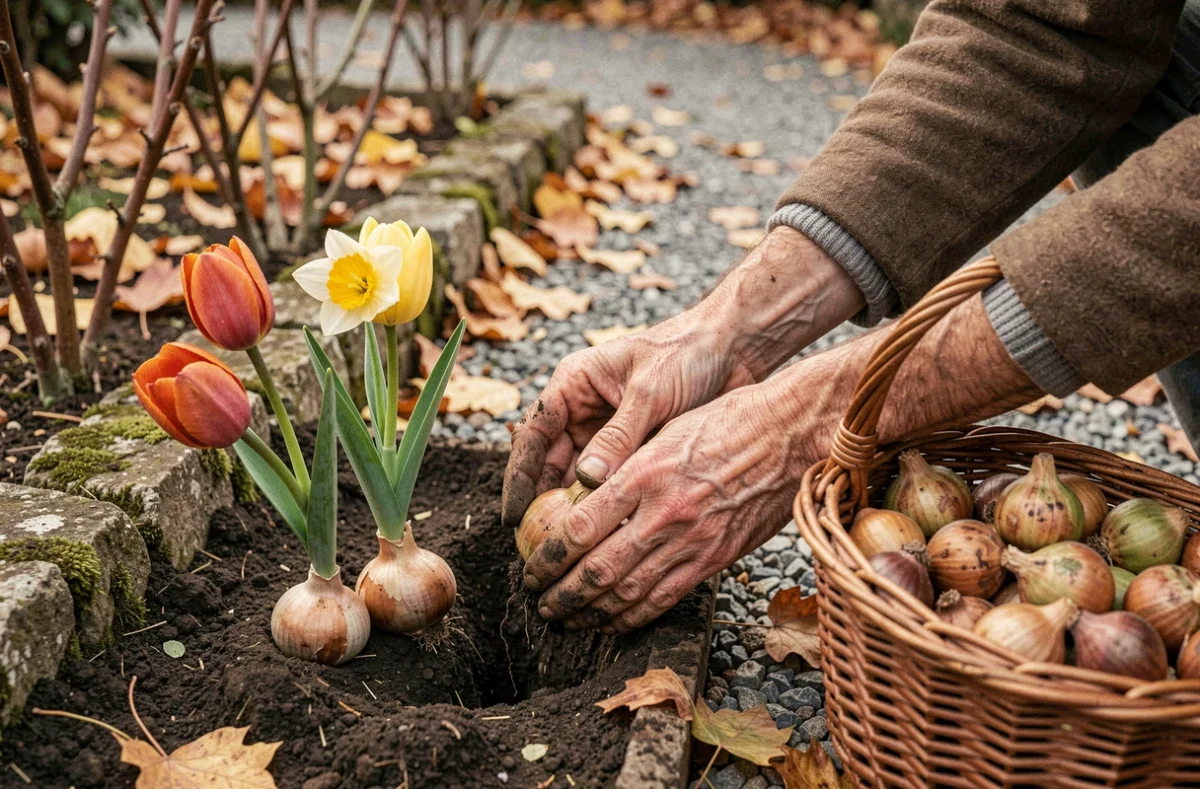
- Spring bulbs (crocuses, daffodils, botanical tulips) are planted in autumn and bloom as early as February-March, when the rest of the garden is still dormant.
- Summer-flowering perennials (echinaceas, gaura, yarrow) take over from May to September and tolerate dry soils once rooted.
- Ornamental grasses (miscanthus, stipas) provide visual presence from autumn until late winter with their dried spikes, while serving as shelter for small wildlife.
The idea is to overlap flowering cycles to eliminate barren periods. A well-thought-out bed combines plants whose peaks of flowering slightly overlap, creating a continuous visual transition.
Pruning and maintenance: actions that change with the season
Pruning remains the least understood action in amateur gardening. Pruning at the wrong time can eliminate the year’s flowering or weaken a shrub against frost.
Late winter pruning
Summer-flowering shrubs (buddleias, panicle hydrangeas, remontant roses) are pruned in February-March, before the vegetation starts. This pruning stimulates the production of new shoots that will bear summer flowers.
Pruning after spring flowering
Shrubs that bloom in spring on the previous year’s wood (forsythias, lilacs, deutzias) should be pruned just after their flowering, never before. Pruning them in winter means cutting the branches that bore the future flower buds.
For the lawn, high mowing (7 to 8 cm minimum) protects the grass from drought by maintaining shade at ground level. Cutting it too short weakens the grasses and encourages moss or weeds.
Sowing and planning the vegetable garden: anticipate rather than catch up
A productive vegetable garden all year round relies on staggered sowings, not on a single spring session. Salads, radishes, and spinach are sown every three weeks from spring to autumn to ensure continuous harvests.
Sowing under cover (cold frames, forcing cloth) allows for gaining several weeks at the beginning of the season and extending harvests until the first frosts. A simple cloth placed over winter lettuce or mâche plants is enough to maintain production in December.
- February-March: sowing under cover of tomatoes, peppers, eggplants. Direct sowing of broad beans and peas.
- April-May: transplanting seedlings to the vegetable garden after the last frosts. Direct sowing of beans, zucchinis, squashes.
- August-September: sowing autumn and winter vegetables (mâche, spinach, cabbages, turnips).
- October-November: planting garlic and shallots. Setting up winter protections.
Water restrictions, choosing plants suited to the local soil, and realistic sowing planning matter more than accumulating seasonal tasks. Timing each action according to the right slot in the calendar avoids having to catch up in August on what should have been prepared in March.
On one point, practitioners confirm the same observation: a covered soil and plants chosen for the local climate reduce work and failures.