Precision in the kitchen depends less on talent than on an utensil’s ability to provide reliable information: the actual temperature of a dish, how evenly heat is distributed, or how sharp a blade is. Choosing the right kitchen equipment starts with understanding what each tool measures, controls, or makes easier at every stage of preparing a dish.
Thermometer probes and cooking control: precision starts with measurement
Most recipes specify a cooking time. This is only a rough guide, as it does not account for the food’s thickness, its starting temperature, or the actual power of the heat source.
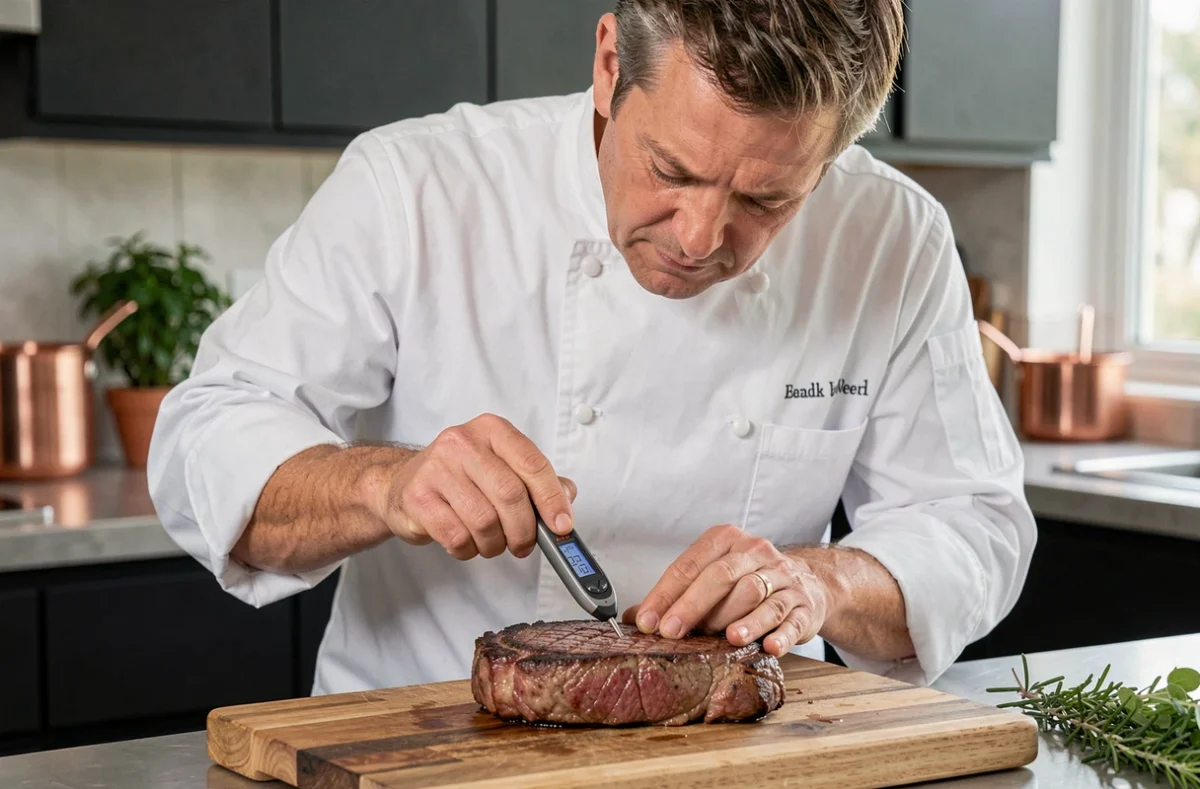
A thermometer probe lets you check the internal temperature of meat, bread, or fish. It is one of the few tools that turns an estimate into a measurable value. With large cuts of meat, the difference between a successful cook and a failed one often comes down to just a few degrees.
Among Chapeau Melon’s equipment, you’ll find this type of tool, designed to bring precision to food preparation, including for home cooks.
Two factors matter when choosing a probe: how quickly it displays a reading and its temperature range. An instant-read model is suitable for quick-cooking foods (steaks, fish fillets), while a wired probe with an alarm is better suited to long cooks in a Dutch oven or in the oven.

Cooktop efficiency: induction, ceramic glass, and actual energy use
The power rating shown on a cooktop says little about its efficiency. What matters is its energy efficiency: the proportion of energy actually transferred to the pan compared with the energy consumed.
According to guidance from ADEME, induction uses less energy than ceramic-glass or conventional electric cooktops for the same cooking task. This is due to how it works: the magnetic field heats the bottom of the cookware directly, without first heating an intermediate surface. This reduces heat loss.
A ceramic-glass cooktop first heats the glass surface, which then transfers heat to the cookware. This delay leads to higher energy use and greater thermal inertia, making it harder to control the temperature precisely when cooking a sauce or reducing a liquid.
A lid as a way to improve efficiency
ADEME estimates that a well-fitting lid can reduce the energy used during cooking. It may seem like a small detail, but choosing a saucepan with a well-fitting lid changes how quickly it heats up and limits evaporation. When buying a stockpot or Dutch oven, checking that the lid fits snugly is just as worthwhile as considering the material.
Chef’s knife and cutting board: the pair that shapes food preparation
A chef’s knife is used for slicing, mincing, chopping, and cutting. It is the most frequently used tool in the kitchen, and the one whose quality you notice most quickly.
Three factors determine a knife’s quality:
- Steel hardness, measured on the Rockwell scale (HRC). Harder steel holds its edge longer, but is more difficult to sharpen at home.
- The balance between the blade and handle. A well-balanced knife puts less strain on the wrist and gives you finer control when cutting vegetables or meat.
- The blade profile. A pronounced curve encourages a rocking motion for chopping herbs, while a straighter blade is better suited to clean cuts (julienne, brunoise).
A cutting board plays a complementary role. Wood (beech, maple) absorbs impact better and helps preserve the knife’s edge. Plastic is easier to sanitize and is suitable for cutting raw meat. Using a quality knife on an unsuitable cutting board wears down the blade prematurely.
Cookware materials: stainless steel, cast iron, and aluminum
The material of a pan or saucepan determines how heat is distributed and retained. Each material has distinct thermal properties suited to specific uses.
Stainless steel heats quickly, but unevenly if the base does not include a layer of aluminum or copper. Clad models with multiple layers address this issue and are suitable for sauces, risottos, and cooking over medium heat.
Cast iron retains heat for a long time. This is an advantage for stews and slow cooking, where the temperature needs to remain stable after the heat is turned down. However, its weight and long preheating time make it impractical for quick dishes.
Lightweight and a good conductor of heat, aluminum is often used in nonstick pans. It heats quickly and evenly, but its durability depends on the coating. A damaged nonstick coating reduces cooking precision because food sticks unpredictably.
Choose cookware based on the dishes you prepare
For recipes that require high-temperature searing (stir-fries, pan-fried dishes), a fast-heating material (aluminum, carbon steel) is preferable. For longer cooking (stews, braises), cast iron or thick stainless steel offers better temperature stability.
- Quick searing and high-heat cooking: carbon steel or aluminum with a durable coating
- Stews and long cooking: enameled cast iron or thick-bottomed stainless steel
- Sauces and reductions: multi-ply stainless steel saucepan for precise temperature control
It’s best to choose kitchen equipment based on how you’ll use it rather than on brand. A carefully selected set of three or four quality utensils can cover most everyday cooking needs, whereas a cheap, complete cookware set often falls short when it comes to dishes that require precision.