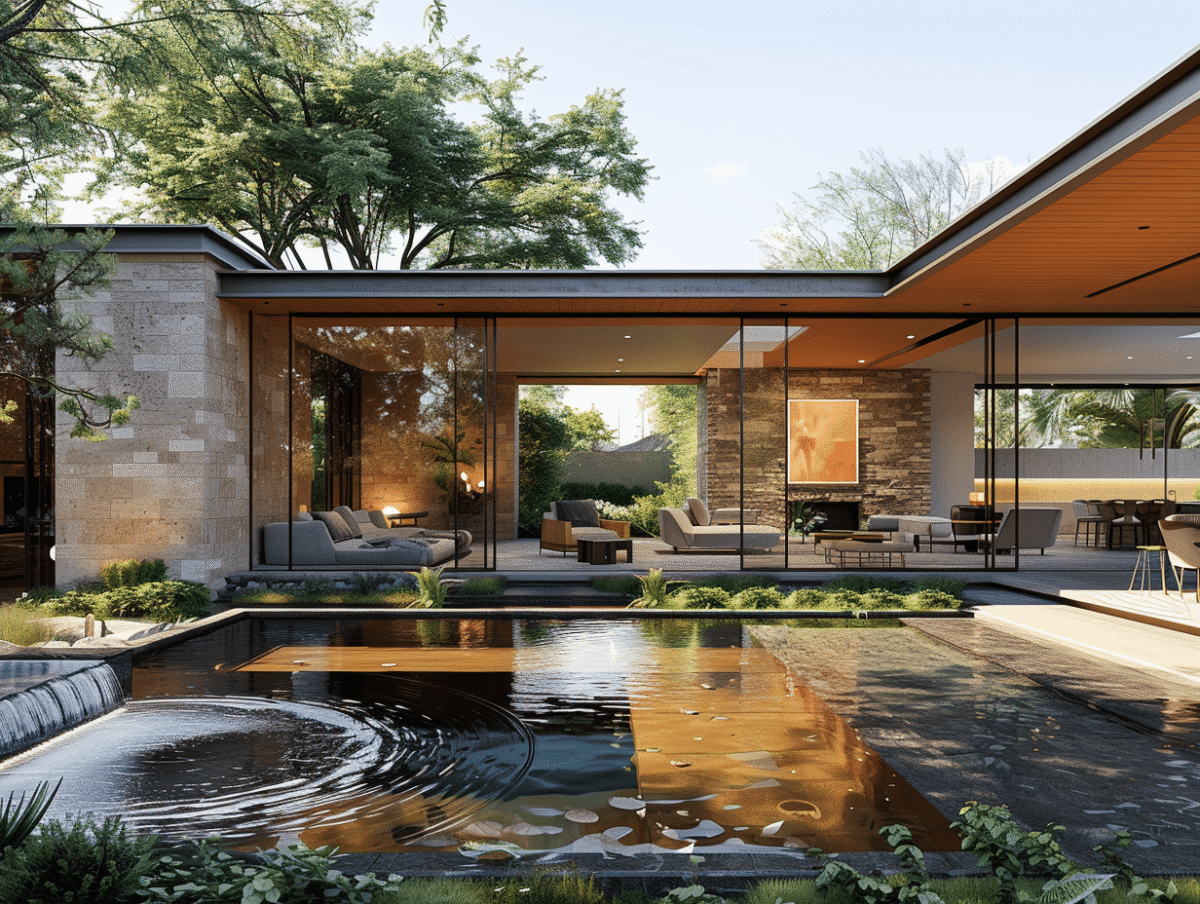
A single-story house offers unparalleled accessibility and smooth circulation, ideal for families with children or elderly individuals. By integrating a central patio into the plan, a protected outdoor living space is created, perfect for relaxing or hosting guests.
This central patio becomes the heart of the home, allowing for abundant natural light and effective cross-ventilation. It also fosters a harmonious connection between the different rooms while adding an aesthetic touch that enhances the overall property. A wise choice for a pleasant and functional living environment.
The advantages of a single-story house
Single-story houses stand out for their accessibility and fluid circulation. All rooms are on one level, making them ideal for various groups of people: children, seniors, individuals with reduced mobility, and young couples. The elimination of stairs reduces the risk of falls and facilitates movement.
Different types of single-story houses
- L-shaped house: This configuration allows for a private corner between the two wings of the building, providing a natural separation between living spaces and sleeping areas.
- U-shaped house: By forming a U, a very intimate terrace can be created at the heart of the home, enhancing privacy and friendliness.
- Cube house: This modern design, often with a flat roof, offers a contemporary aesthetic while maximizing interior space.
- Step house: This configuration highlights perspectives and depth effects, creating distinct areas while maintaining visual continuity.
- House with an interior patio: The central patio becomes a green space visible from all rooms of the house, bringing light and serenity.
The single-story house can contain several essential spaces such as the living room, kitchen, bedrooms, bathroom, and sanitary facilities. Optionally, it can include a basement, convertible attic, flat roof, terrace, or even a swimming pool.
Single-story house plan with central patio
The choice of a single-story house plan with a central patio allows for optimizing natural light and cross-ventilation. This central patio becomes the heart of the home, promoting a harmonious connection between the different rooms and providing a protected outdoor space. This configuration is particularly suited for building plots that require a certain discretion and compliance with the Local Urban Planning Plan (PLU) regulations.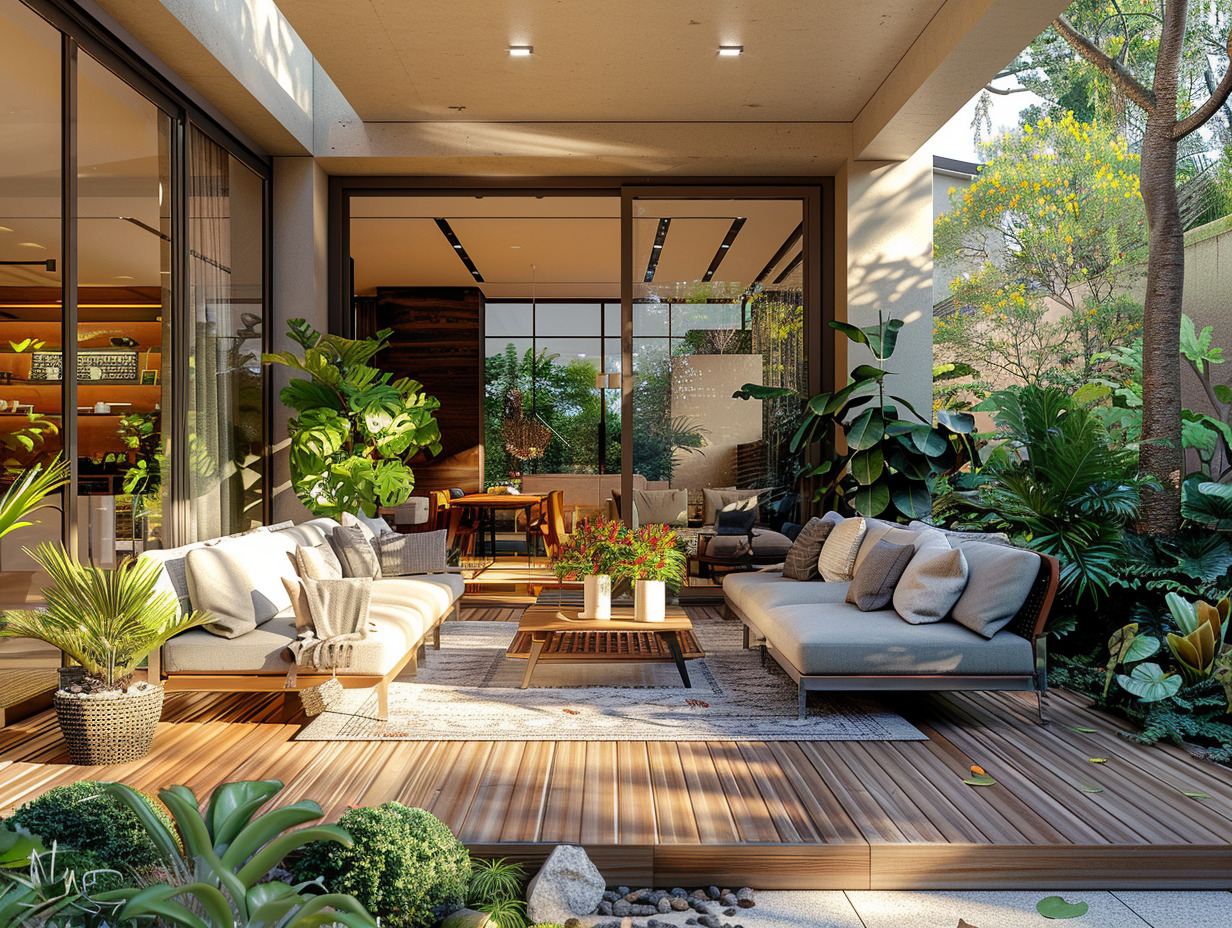
Why consider a central patio in your plan
The idea of integrating a central patio into the plan of a single-story house is not new, but it proves particularly wise for several reasons. First, the central patio acts as a well of natural light, flooding adjacent rooms with brightness and thus reducing the need for artificial lighting. This increased brightness contributes to a better quality of life and optimal visual comfort.
The central patio promotes effective natural ventilation. By allowing cross-air circulation, it helps maintain a pleasant temperature inside the house, thereby reducing the need for air conditioning. This natural ventilation is especially welcome in hot or humid regions.
Another significant advantage is the aesthetic and functional aspect of the central patio. It becomes a protected outdoor space, perfect for moments of relaxation or conviviality with family and friends. You can install plants, garden furniture, or even a fountain, creating a true haven of peace at the heart of your home.
Elements to consider
- Building plot: The configuration of your plot is fundamental for integrating a central patio. Check the dimensions and shape of your lot.
- PLU regulations: Ensure that the Local Urban Planning Plan (PLU) of your municipality allows for this type of development.
- Interior layout: The patio should be accessible and visible from the main living areas such as the living room, kitchen, and bedrooms.
The central patio can thus transform a single-story house into a bright, ventilated, and aesthetically pleasing space while respecting the constraints of your plot and local regulations.