After 60, the question is not simply about living longer, but about maintaining enough autonomy and vitality to enjoy those years. Preserving health after 60 relies on concrete levers, several of which would benefit from being more integrated into routine medical follow-up.
Medication Review and Fall Prevention: A Common Blind Spot
Among the documented risk factors, medications that increase the risk of falls deserve particular attention. Sleeping pills, antihypertensives, psychotropics, or analgesics can alter balance, alertness, or blood pressure when standing.
The HAS recommends, in its guidelines on fall prevention for elderly people living at home, an approach that combines adapted physical activity, assessment of walking and balance disorders, environmental adaptation, and above all, systematic review of medications that may promote falls. Asking your doctor for an annual reevaluation of your prescription is not just an organizational detail; it’s a genuine preventive measure.
To delve deeper into prevention strategies suitable for those over 60, the information on the SanaVitae website helps to better identify the resources available in terms of health and support.
Identifying Frailty After 60: The ICOPE Model and Its Limitations
Monitoring weight and blood pressure is not enough to detect accelerated aging. The ICOPE program, developed by the World Health Organization and adopted in France in several regional initiatives, offers a multidimensional assessment covering six areas: mobility, memory, nutrition, vision, hearing, and psychological state.
The value of this model lies in identifying subtle declines that, when viewed in isolation, seem benign. A slight decrease in hearing combined with early muscle loss and low morale may signal a state of frailty requiring coordinated care.
Field feedback varies on this point: the deployment of ICOPE remains uneven across regions, and not all healthcare professionals are yet using it. The most useful assessment is the one that the patient requests from their primary care physician, mentioning these six dimensions rather than just one symptom.
Muscle Strengthening and Balance: Two Distinct Abilities to Work on Separately
Walking thirty minutes a day is a good starting point, but walking alone does not prevent age-related muscle loss. Sarcopenia (progressive loss of muscle mass and strength) affects a significant proportion of those over 60 and accelerates the loss of autonomy.
Fall prevention, as recommended by the HAS, explicitly distinguishes two axes:
- Muscle strengthening, which targets the lower limbs and trunk to maintain the ability to stand up, climb stairs, or carry everyday loads.
- Balance training, which engages proprioception (awareness of the body’s position in space) and reduces reaction time in case of imbalance.
- Adapting the home environment (lighting, rugs, grab bars), often relegated to the background but crucial in reducing falls at home.
Combining strengthening, balance, and home modifications yields better results than each measure taken in isolation. Simple exercises (standing up from a chair without using hands, balancing on one foot, partial squats) can be done at home without equipment.
Vaccination After 65: A Broader Schedule Than Expected
The vaccination schedule for seniors is not limited to the seasonal flu. Shingles, pneumococcus, whooping cough, and Covid-19 are among the vaccinations recommended or to be evaluated with the primary care physician, and vaccination coverage for those over 65 is still below the set targets.
Checking all vaccination boosters with your doctor or pharmacist is a concrete preventive action that can be accomplished in a single consultation. The difficulty is not access to the vaccine, but the fact that many patients (and sometimes practitioners) limit the discussion to the flu vaccine alone.
An up-to-date vaccination schedule reduces the risk of severe forms of infectious diseases that, after 60, more frequently lead to prolonged hospitalizations and a lasting loss of autonomy.
Nutrition and Protein After 60: Increasing Needs, Not Decreasing
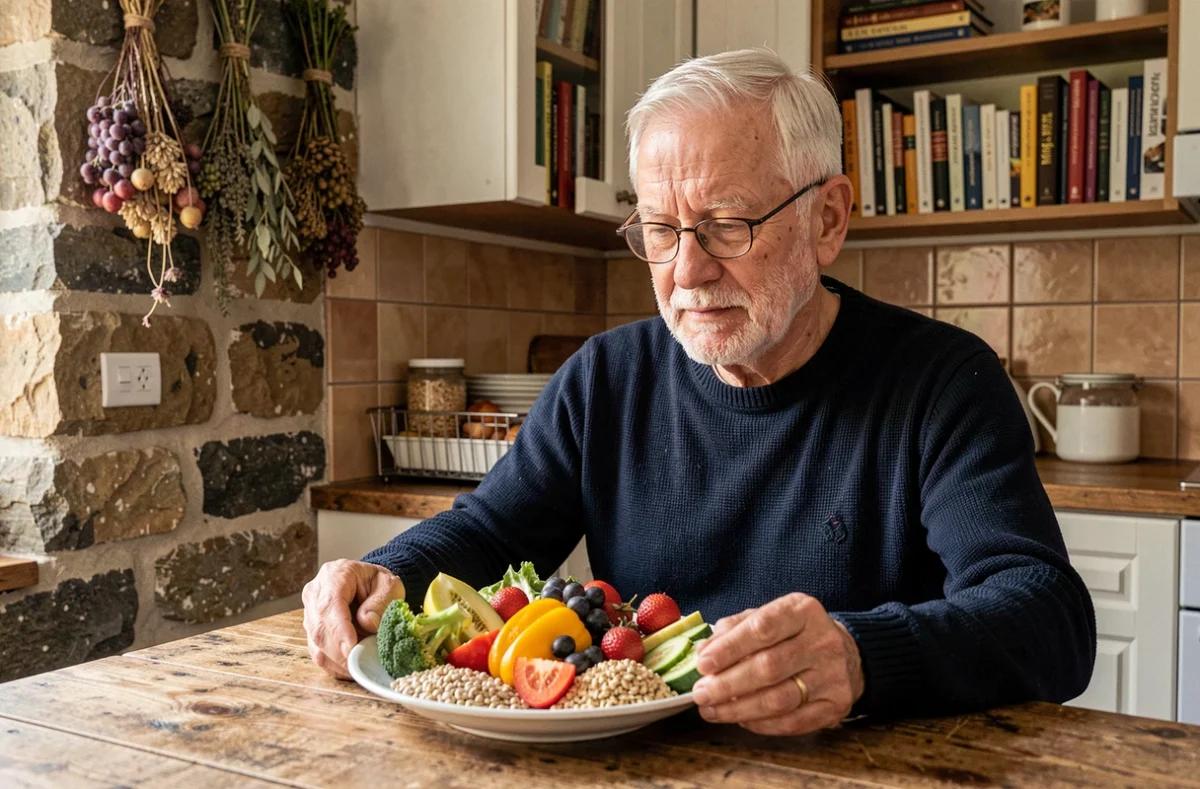
Protein needs increase with age, not the other way around. The body absorbs protein less efficiently after 60, which requires consuming more to maintain muscle mass. Meat, fish, eggs, legumes, or dairy products should be included in every main meal.
Dehydration is another common pitfall: the sensation of thirst diminishes with age, while the kidneys lose their ability to concentrate urine. Drinking regularly without waiting for thirst (water, herbal teas, soups) remains a reflex to consciously maintain.
- Distributing protein intake over three meals rather than concentrating it in one, to optimize absorption.
- Maintaining sufficient calcium intake through dairy products or mineral waters rich in calcium, alongside moderate sun exposure for vitamin D.
- Adding snacks (yogurt, fruits, nuts) to compensate for the early satiety that sets in with age.
The quality of nutrition directly influences the body’s response to physical activity. Without adequate protein intake, muscle strengthening exercises lose much of their effectiveness.
Prevention after 60 is not just a list of good habits. It relies on specific actions, regular reevaluation of one’s medical situation, and coordination between nutrition, physical activity, and vaccination follow-up. Each medical consultation is an opportunity to ask questions about these six dimensions (mobility, memory, nutrition, vision, hearing, morale) rather than waiting for a problem to become visible.