
A baby grabbing their foot, gazing at a face, or cooing after a feeding: every gesture in daily life contributes to their development. Understanding how awakening, care, and the rhythm of the day interconnect allows you to support your child without feeling the need to multiply activities at all costs.
Why think in terms of 24 hours rather than just awakening activities
Most parenting guides focus on play and stimulation. This approach overlooks a central point: baby’s development happens throughout the entire day, including sleep.
The World Health Organization published recommendations in 2019 that explicitly link movement, sleep, sedentary time, and social interactions for children under five years old. For infants, the guidelines suggest promoting floor play and interactions with adults, limiting prolonged periods in a bouncer or car seat, and not introducing sedentary screen time before one year of age.
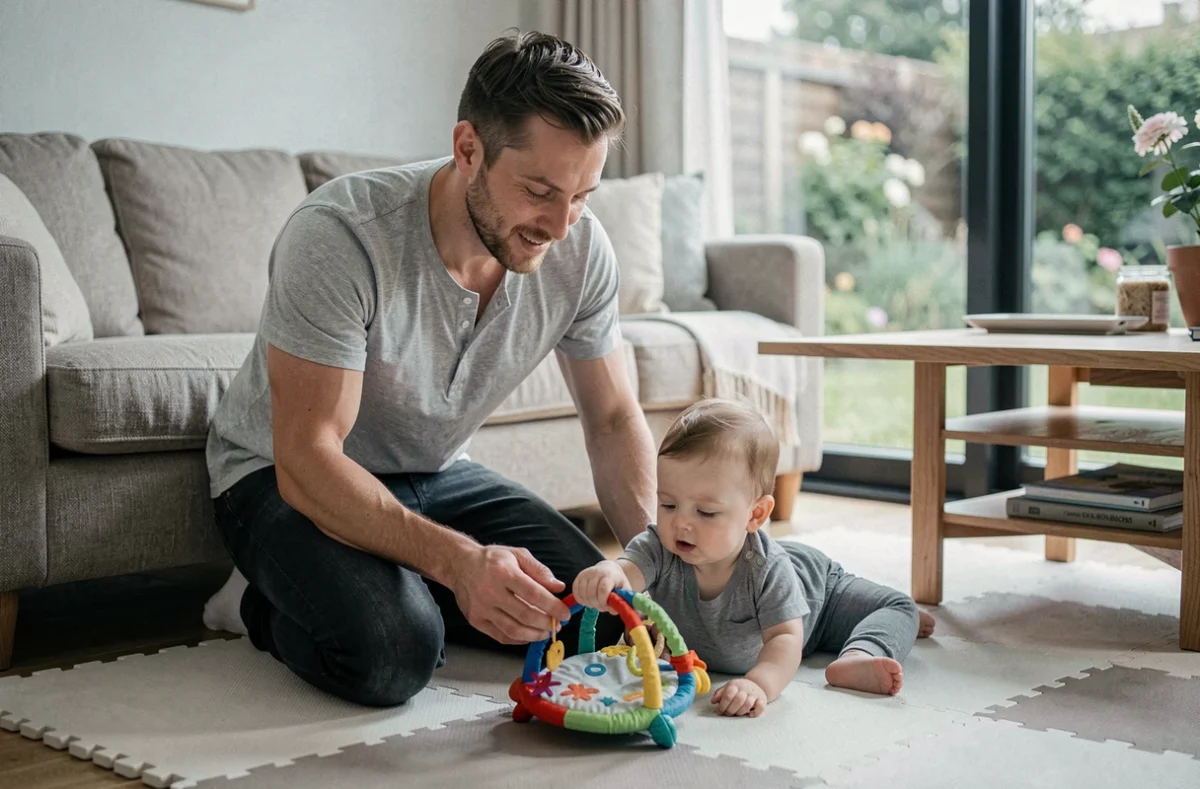
In practical terms, a baby placed for twenty minutes on a firm mat, free to roll and lift their head, works on their motor skills just as much as with a sophisticated developmental toy. The articles you will find in the baby category on Je Suis Maman detail many ideas for varying these floor times according to age.
Have you ever noticed that a tired or overstimulated baby becomes irritable and no longer enjoys anything? That’s because sleep is not a break between activities; it is a driver of brain development. An infant who sleeps enough consolidates the neural connections formed during their waking phases.
Screens before two years: what really poses a problem
The debate on screens often boils down to a maximum duration. Recent recommendations go further. The American Academy of Pediatrics has formalized the so-called “5 C” approach: the child themselves, the content, the desired calming effect, the activities replaced, and family communication around the screen.
A screen becomes problematic when it replaces motor play, sleep, or face-to-face interaction. A baby watching a video while their parent prepares a meal does not experience the same impact as a baby left in front of a screen at the time they should be sleeping.
Before one year, the WHO recommends zero sedentary screen time. Between one and two years, caution remains advisable. The key criterion to consider is not just the number of minutes, but what the screen encroaches upon during the day:
- Free playtime on the floor, which builds gross motor skills and coordination
- Verbal interactions with adults, which nurture language long before the first words
- Phases of calm or sleep, during which the brain sorts and consolidates its learning
When these three areas are preserved, a short moment of screen time shared with a parent (such as a video call with a loved one) does not pose any particular difficulty.
Daily baby care: moments of development in their own right
Changing, bathing, and dressing are often perceived as logistics. In reality, each care moment is an opportunity for sensory and language interaction.
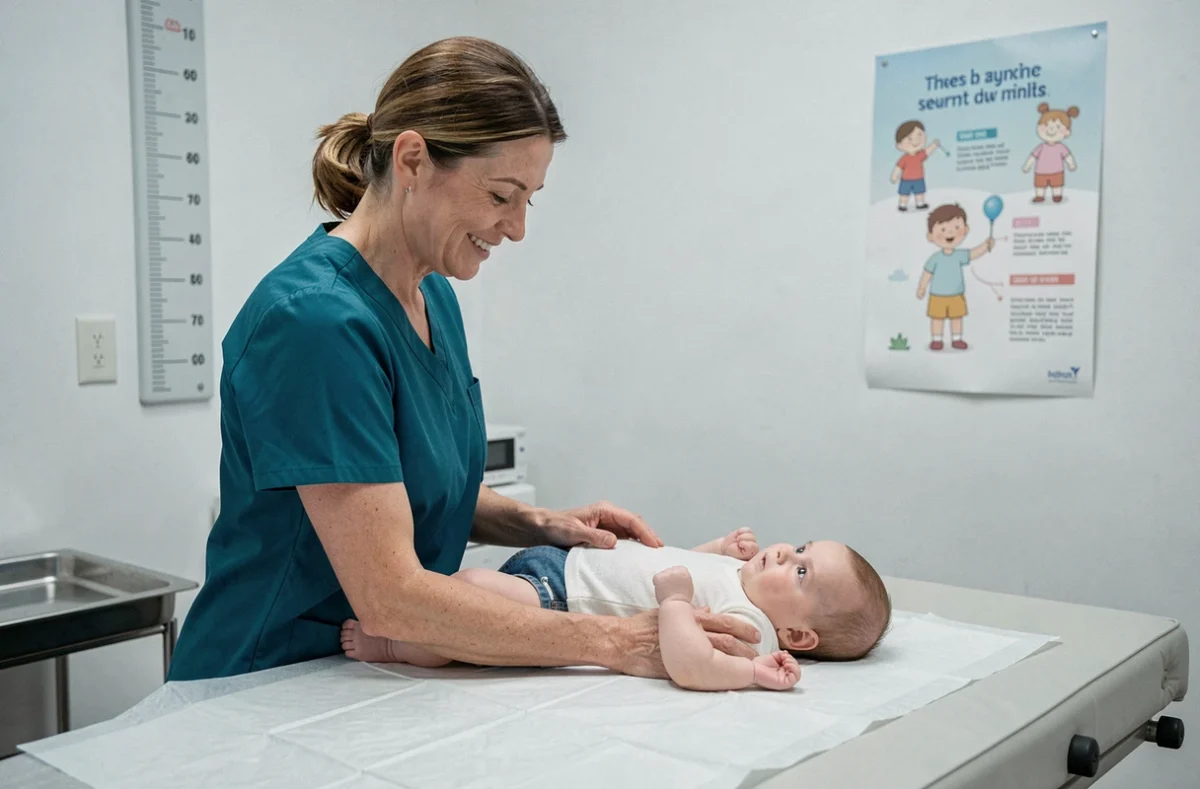
During a diaper change, naming body parts, warning the baby before lifting them, and giving them time to react: these simple gestures build their understanding of language and their sense of security. A baby who is spoken to during care hears more words throughout the day than a baby stimulated only during scheduled play sessions.
The bath as a sensory space
Water offers sensations that a play mat does not provide: buoyancy, resistance, temperature. The bath engages touch, balance, and proprioception simultaneously. A cup to fill and empty is enough for an eight or nine-month-old baby to explore the concept of containment, long before they can name it.
Adapting care to fatigue
An overstimulated infant shows recognizable signals: they look away, fidget, cry for no apparent reason. These signs indicate sensory overload. When they appear, it’s better to shorten the bath or simplify dressing rather than maintaining the full routine.
Safe sleep and development: an aspect too often separated from awakening
Content about baby awakening rarely addresses sleeping arrangements. Content on safe sleep says little about development. This separation is artificial.
A safe sleeping environment is the first condition for restorative sleep, and thus for good development. The concrete markers to check are:
- Baby lying on their back, on a firm and flat mattress, without pillows, blankets, or soft objects
- Room temperature maintained around a moderate value, without excess blankets
- No bed-sharing with adults during the first months, but room proximity that facilitates breastfeeding and monitoring
These conditions, maintained night after night, allow the infant to have more regular sleep cycles. And it is during these cycles that the brain consolidates the skills acquired during the day, whether in motor skills, language, or face recognition.
A baby’s development cannot be compartmentalized: awakening on one side, care on the other, sleep elsewhere. Every moment of the day, including the most ordinary, contributes to building their motor, sensory, and relational abilities. Protecting sleep, limiting sensory overload, and talking to your child during daily routines remains more effective than any early stimulation program.