A freshly sown lawn does not absorb water like a lawn that has established itself over the seasons. Overly dense hedges compete for every inch of light and water, hindering the growth of all shrubs, while good spacing promotes dense and vigorous vegetation over time. Some all-purpose fertilizers deplete clay soils but stimulate flowering in sandy soil. Gravel paths prove to be low-maintenance, except during heavy rains when drainage becomes an unexpected challenge.
Where to start imagining a garden that reflects you?
Designing a garden is first about taking the time to observe the space, the light, and the cycles of the seasons. A garden plan takes shape from your desires: a wish for a refuge for biodiversity, a relaxation corner, a natural extension of the living room, or a vegetable garden to harvest ingredients for cooking? Get your hands in the soil. Clay soil retains water, while sandy soil requires frequent additions. The local climate, often underestimated, directly influences the choice of plants and the success of your landscaping project.
The style of a garden takes shape between your aspirations and the limitations, or advantages, of the land. A geometric and structured garden, a meadow welcoming insects and birds, a natural space where mulching and plant associations play the ecology card: each orientation reflects a personal vision. Make a list of points to watch: exposure, slopes, access to water. Identify cast shadows, sheltered corners where unexpected plantings could thrive.
To get started, don’t hesitate to consult resources like clicgarden.net, which offers a clear method and practical advice for easily organizing your green spaces. Draw paths, distribute structural trees, outline the contours of flower beds. There’s no need to multiply species: a coherent palette, alternating between ground vegetation and mineral surfaces, will also welcome local wildlife. A well-thought-out garden project becomes a discreet signature, both intimate and open, true to what makes you unique.
Essential tips for creating practical and pleasant green spaces
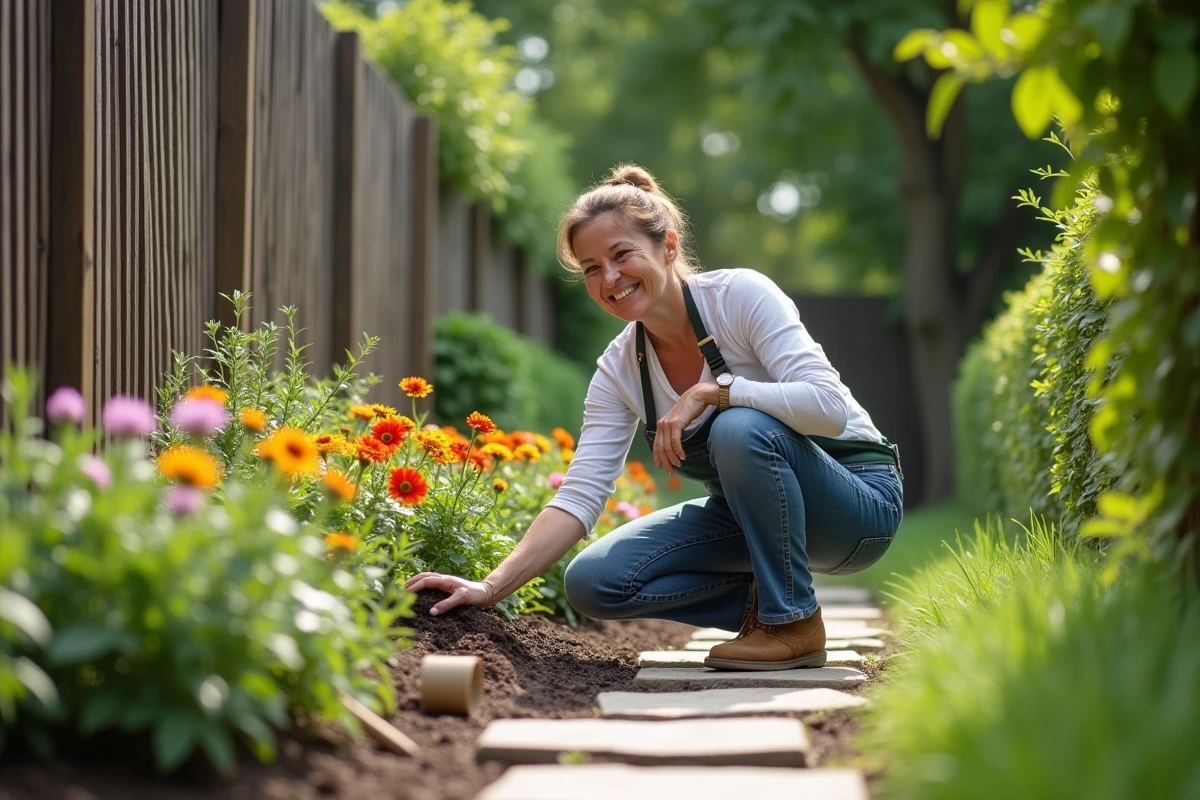
Creating a garden that is both practical and pleasant means finding the right balance between utility and visual enjoyment. Before diving in, think about the daily use of different corners of the space. A stepping stone path, a terrace to stretch out in the shade, carefully designed flower beds: every detail shapes the place, directs circulation, and draws the eye where it needs to go. Climbing plants, installed on a pergola or trellis, provide verticality, light shade, and free up ground space.
The choice of plants is just as important for the ambiance as it is for ease of maintenance. Favor varieties suited to your climate and soil type. For a garden that blooms from spring to winter, combine perennials, shrubs, and bulbs with staggered flowering. The border flower beds outline the contours, simplify maintenance, and highlight the blooms.
To guide you, here are some concrete ideas to explore:
- Opt for robust plants to limit watering and repeated care.
- Bamboo makes an effective natural hedge for preserving privacy.
- Vary the textures: alternate lawns and mineral mulch to enrich the ambiance.
A thoughtful layout takes circulation into account: keep paths clear, plan resting spots, and integrate small discreet seating areas among the plants. Light, whether natural or diffused in the evening, highlights every corner and extends the life of the garden. To add dimension to your space, play with heights, diversify perspectives, and combine varied foliage and contrasting flower colors.

What if maintenance became (almost) child’s play?
A garden designed from the start to last makes every task simpler. Focus on maintenance solutions that are low in energy and time consumption. Perennial flower beds, for example, require little care. Natural mulching, such as wood chips, leaves, or bark, limits the regrowth of unwanted plants, retains moisture, and nourishes the soil. Maintaining your garden then becomes a measured ritual, far from endless chores.
Watering can be reasonable, with well-targeted watering cans or a discreet micro-irrigation system tailored to the needs of each plant. An ecological garden relies on simple actions: homemade compost, rainwater harvesting, gentle pruning of hedges or trees at the end of winter. Even in the cold, the garden should not be neglected: trim perennials, aerate the soil, and monitor young shoots.
Adopt these practices to facilitate maintenance throughout the seasons:
- On lawns, let the grass grow longer to promote biodiversity.
- In gravel or mulched areas, reduce interventions and observe how the garden evolves naturally.
A zen garden, inspired by Japan, cultivates simplicity: regular pruning, carefully raked gravel, shaped shrubs. Garden maintenance then transforms into a time of observation, calm, a discreet connection to your environment. Every action counts, each intervention refines the balance of a living space that is simple to manage. Ultimately, the garden becomes an extension of your hand and gaze, a place where nature and intention converse in complete simplicity.