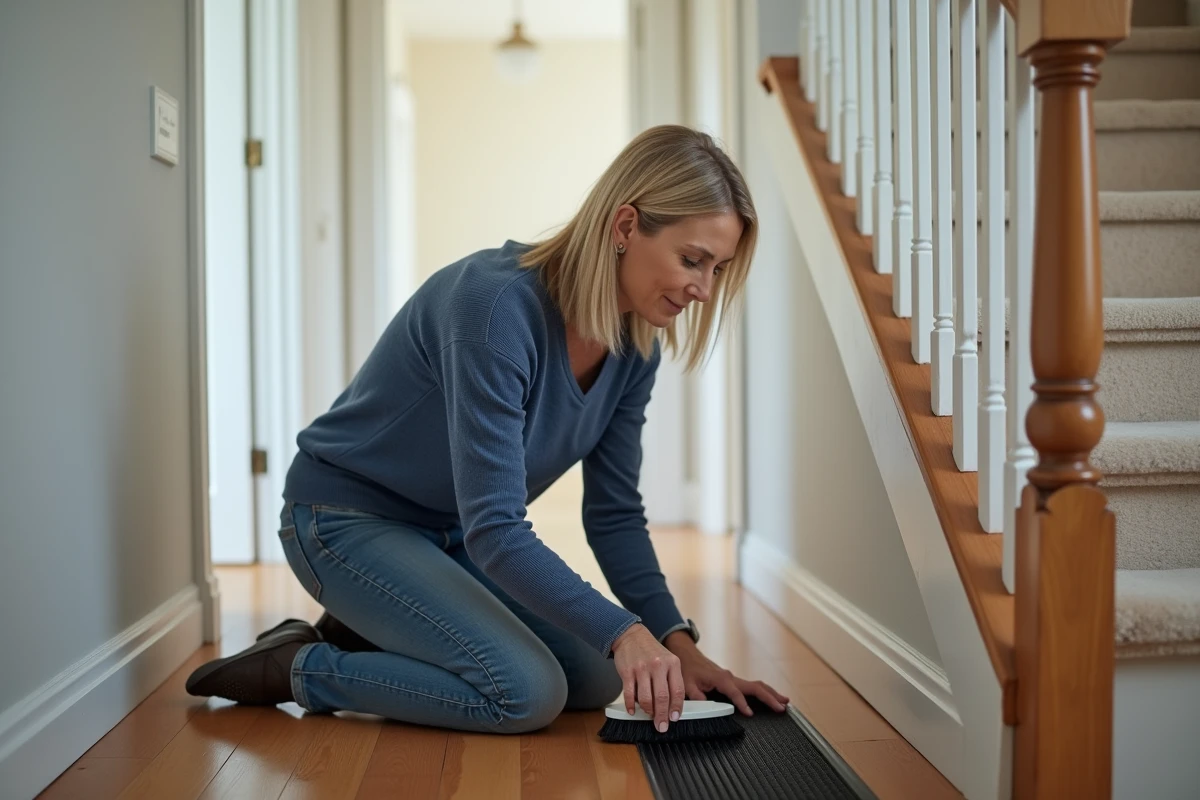
Anti-slip strips quickly accumulate residues and dirt, compromising their effectiveness. Inadequate cleaning risks damaging their surface or reducing their grip. Some common household products should be avoided as they can make the strips slippery or wear them out prematurely. Specific methods exist to preserve the durability and safety of these devices. Regular maintenance, combined with the use of suitable products, limits the risk of accidents and extends the performance of anti-slip surfaces.
Why regular maintenance of anti-slip strips is essential for your safety
Installing anti-slip strips on a floor does not eliminate the risk of falls. A small defect, subtle wear, or adhesive failure is enough to turn a simple staircase into a dangerous area, especially in wet or heavily trafficked places. Grip must be earned and maintained. Dust, grease marks, or accumulated dirt will eventually reduce their effectiveness.
Whether in a business, a public establishment, or at home, installing anti-slip strips on steps, ramps, or showers actively helps limit accidents. But without maintenance, performance drops drastically. A strip that curls or whose contrast fades becomes a false protection, and the risk does not give warning. Maintenance frequency depends on traffic: weekly in busy hallways, monthly in most professional buildings, and quarterly at home.
To maximize their lifespan, simply draw from the advice from Guide Seniors. Their method: regular visual checks, adhesive verification, and quick replacement of strips that show signs of weakness. Taking care of your surfaces means reducing missteps, day after day, for all users.
Which products and actions to prioritize (or avoid) for safe cleaning
To clean anti-slip strips without weakening them, it’s best to adopt certain habits. Gentleness is key, and a few suitable products are enough to dislodge dirt while preserving grip.
Here are the best practices to incorporate into your routine:
- Prefer a soft-bristle brush to remove embedded dirt, reserving hard brushes for only stubborn stains.
- For stubborn deposits, opt for a solution of diluted white vinegar, a bit of dish soap, or baking soda. On the edges of steps, Marseille soap cleans without attacking the adhesive.
- Rinse with warm water to remove all residues, then dry carefully to prevent moisture from penetrating under the strip and weakening the adhesive.
Certain products should stay far away from your anti-slip strips: strong solvents, concentrated acids, or pure bleach put the adhesive to the test and damage the surface. The same goes for metal scrapers or abrasive sponges that scratch the coating and undermine their effectiveness.
No matter the surface, whether concrete, tiles, wood, or metal, the key is consistency and adapting actions to ensure a reliable and safe floor every day.
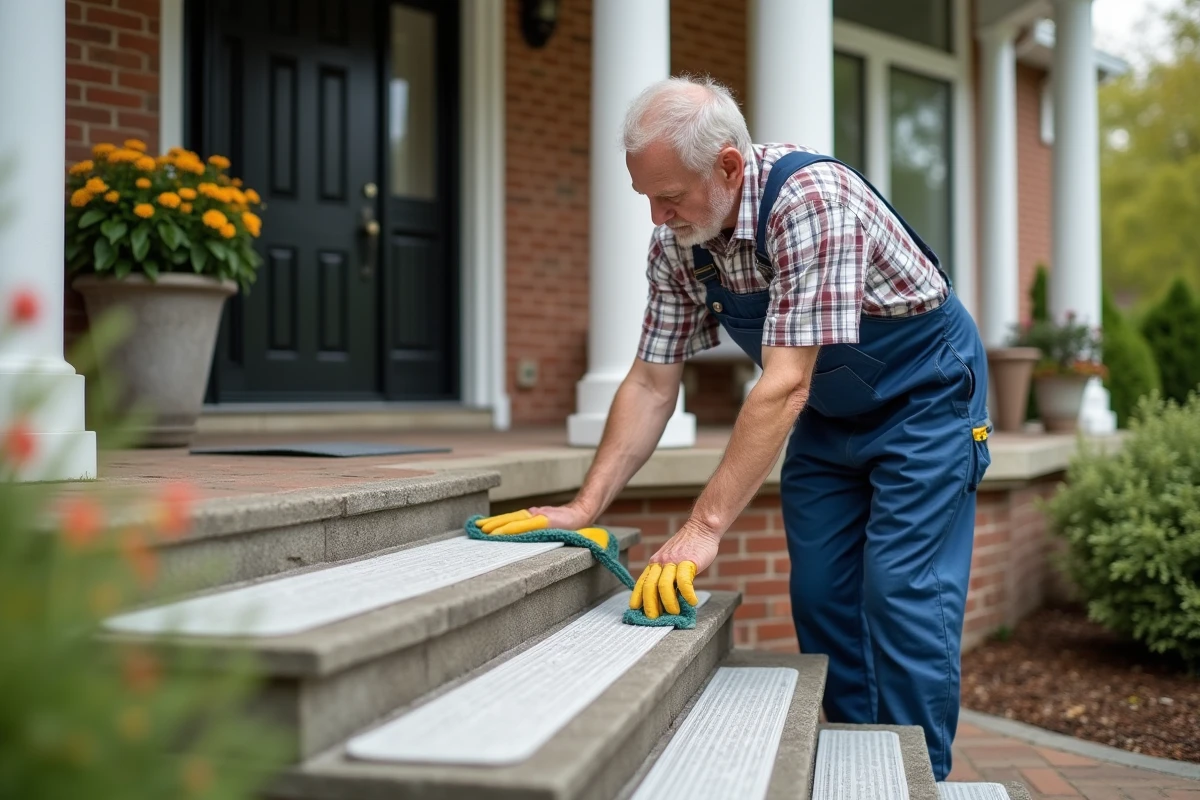
Simple tips to keep your anti-slip floors clean and effective every day
Regular maintenance makes all the difference, especially in high-traffic areas or those exposed to moisture. Frequent sweeping with a broom or vacuum prevents dust from settling and makes cleaning easier. For routine maintenance, warm water with a bit of dish soap or a touch of diluted white vinegar works very well without altering the surface.
Remember to check the edges of the strips after each cleaning: any sign of peeling should be addressed immediately. Adding an edge fix enhances their hold. During installation or replacement, it is imperative to start on a perfectly dry and clean surface to avoid mold and early peeling.
In high-use areas like entrances, ramps, or bathrooms, adjust the frequency: weekly for very busy zones, monthly in calm public establishments, and sufficient every three months at home. Don’t forget the grooves or crevices: a small soft brush easily reaches these areas without scratching the strip.
And to finish each cleaning, dry thoroughly. Where moisture settles, it’s the best way to prevent mold and premature wear. In this way, anti-slip strips will protect you over time, and going up or down a staircase will remain a routine action, never a risky gamble.