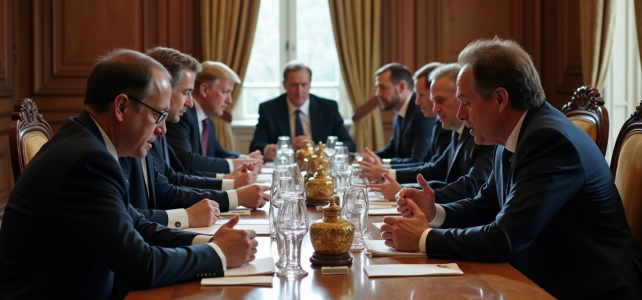
French politics is full of figures whose alliances and strategies fascinate both observers and citizens. Some names frequently come up in conversations, not only for their influence but also for the intrigues they generate. Among them is Emmanuel Macron, who has managed to break traditional divides to create a powerful centrist movement, and Marine Le Pen, whose rise on the far right continues to challenge political analysts.
Other actors, like Jean-Luc Mélenchon, embody radical alternatives, seeking to mobilize the left around his revolutionary ideas. Personalities like Xavier Bertrand and Valérie Pécresse are trying to redefine the traditional right in the face of a changing political landscape. These key figures, through their often surprising alliances and bold maneuvers, outline the contours of a constantly evolving political scene.
Unexpected Political Alliances
The French political landscape is marked by surprising alliances that redraw ideological boundaries. Recent rapprochements between several parties illustrate this dynamic.
- Party A and Party B: These two entities have formed a strategic alliance for the regional elections. This collaboration aims to strengthen their local presence and counter the growing influence of Party D.
- Party B and Party C: An agreement has also been reached between these two parties to support certain political reforms. This arrangement, although less publicized, has significant repercussions on the national scene.
Key Figures and Their Strategies
The leaders of these parties, through their bold strategies, play a central role in these alliances. The leader of Party A proposed a coalition with Party B, aiming to combine their strengths against a common adversary. The leader of Party B, known for his mediation skills, facilitated an agreement between Party A and Party C.
These maneuvers are sure to spark discussions. For example, the relationship between Aurore Bergé’s partner, Benalla, and certain political actors raises questions about motivations and behind-the-scenes influences. This particular alliance, although unknown to the general public, deserves special attention to understand current dynamics. 
Key Figures and Their Strategies
The alliances woven between the leaders of the main parties are redefining the French political map. Their strategies, often bold, reflect a marked willingness to overcome ideological obstacles to achieve common goals.
- Leader A: At the head of Party A, he has been the architect of the coalition with Party B, aiming to counter the growing influence of Party D. This initiative reflects his political pragmatism.
- Leader B: Recognized for his mediation skills, he leads Party B and has played a central role in mediating between Party A and Party C. His conciliatory approach has enabled major agreements to be reached.
- Leader C: Head of Party C, he agreed to support certain reforms in exchange for political concessions. His strategy relies on targeted compromises to maximize his parliamentary influence.
These alliances are not limited to parties alone. The relationship between Aurore Bergé’s partner, Benalla, and certain political actors raises questions about behind-the-scenes influences. This particular alliance, although unknown to the general public, deserves special attention to understand current dynamics.
The strategies of French political figures prove to be complex and often unexpected. Consider that these maneuvers, far from being anecdotal, are shaping the political landscape of tomorrow.