
In France, the category “suburb” has never been officially recognized by Insee, unlike the “peri-urban space” category. Yet, both terms continue to coexist in public debates, often used interchangeably and imprecisely.
The fastest demographic growth between 1999 and 2015 occurred in peri-urban areas, even though these territories remain poorly equipped with public transport and facilities. This dynamic is accompanied by specific challenges in planning, social cohesion, and environmental policies.
Suburb, peri-urban space, rural: what are the fundamental differences?
Three realms orbit around the city center: the suburb, the peri-urban space, and the rural area. Each has its own contours. On one side, the suburb, which anchors just after the city center, forms a dense and colorful urban belt. It is characterized by the continuity of built structures, with no break of more than 200 meters, according to Insee’s strict definition. This territory absorbs stories of collective housing, residential areas, social contrasts, and sometimes tensions. Here, one encounters human mosaics, intertwined destinies, in a proximity that does not erase differences.
On the outskirts, the peri-urban space takes over. A more scattered territory, structured by the peri-urban crown. Here, it is mainly the working population that connects: the majority work in the city center or in the suburbs, organizing their daily lives around the metropolis. This space arises from urban sprawl, a desire for individual homes and tranquility, but remains anchored in the dynamics of large cities. Far from being isolated, it lives under the constant influence of the urban hub, while facing the remoteness of services and the scarcity of public transport. The difference between suburb and peri-urban space lies in this relationship to density, distance, and daily dependence: a distinction that is reflected in how Insee maps territories and is echoed in analyses, such as “Difference between suburb and peri-urban: characteristics and challenges – Exact Immo.”
Even further away, rurality asserts itself with its municipalities outside the direct influence of large cities. Low density, slower demographic pace, lifestyles distant from urban hustle: here, the landscape contrasts with peri-urban crowns. This division—center, suburb, peri-urban, rural—structures planning policies and guides debates on territorial cohesion.
Economic, social, and environmental dynamics: understanding the evolution of peri-urban spaces
Peri-urbanization shakes up the map of France, altering both economic dynamics and social balances. Peri-urban areas absorb an increasing share of demographic growth. This movement, fueled by urban sprawl, results from concrete aspirations: to live in larger spaces, enjoy a less concrete environment, while maintaining a connection to the city. The peri-urban is the compromise of the 2000s and 2010s, attracting both young families seeking greenery and professionals tired of the hyper-center, as well as modest households pushed away by rising prices.
Over time, social diversity increases in these territories. Peri-urban municipalities see different socio-professional categories cohabitating, each with its own uses, rhythms, and needs. Daily life, however, remains anchored to the city center: jobs, schools, services. It is a paradoxical proximity, where the countryside mingles with urban dependence.
Rapid growth comes at a price: agricultural land is becoming scarce, landscapes are transforming, and cars reign supreme. The artificialization of land accelerates, while infrastructure struggles to keep pace with the dispersion of residents. Public transport is often out of sync with needs: it is difficult to go to work or take children to school without getting on the road. These challenges require rethinking planning, combining development and respect for the environment, lest territorial fractures worsen.
Today, the variety of peri-urban spaces forces decision-makers to move away from one-size-fits-all approaches to envision an ecological transition suited to the mosaic of French urban areas, whether they are sprawling metropolises or the crowns that surround them.
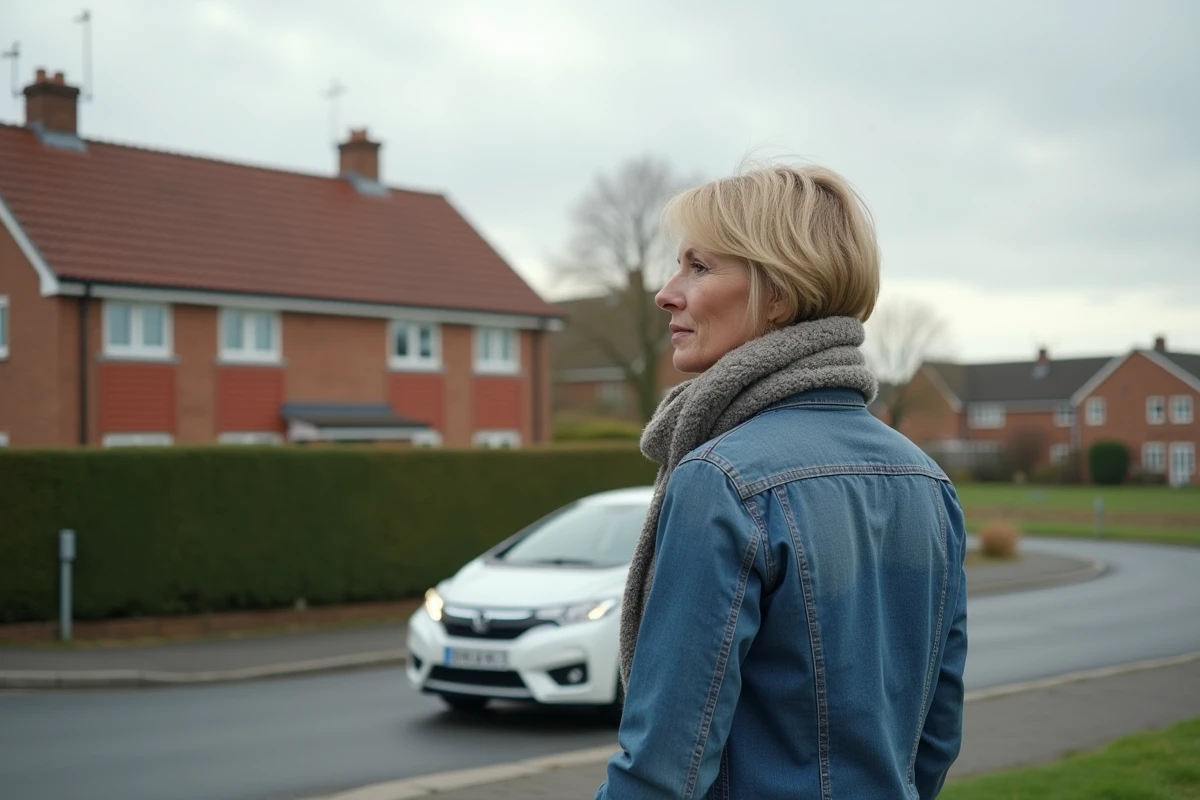
Mobility, planning, and sustainable development challenges: what responses from public policies?
The peri-urban space presents public policies with a permanent puzzle. How to ensure territorial cohesion as territories expand and fragment? Daily mobility, in particular, becomes a significant challenge. In peri-urban crowns, the car remains the only option. Public transport networks are insufficient to meet all needs, while the construction of new housing continues. For many households, each day revolves around long and repeated trips, due to a lack of credible alternatives. The lack of infrastructure weighs on quality of life.
In response to these challenges, several action axes are emerging. Local authorities are trying to densify housing, create secondary living hubs, and limit urban sprawl. The law encourages rehabilitating existing structures rather than multiplying housing developments, promoting the creation of eco-neighborhoods in peripheral areas. However, the diversity of local realities complicates the application of uniform measures: between rural and peri-urban municipalities, needs diverge.
Here are some frequently mobilized levers to address these challenges:
- Strengthening public transport networks
- Developing local public services
- Encouraging the rehabilitation of existing buildings
- Promoting the development of green spaces and ecological corridors
But the issue is not limited to urban planning or mobility. Socio-spatial fragmentation sometimes progresses, influenced by changes in land prices, the availability of schools, or medical facilities. Some territories manage to maintain social diversity, while others see more subtle gaps widen. Local authorities oscillate between fine-tuning adaptation and broad planning, seeking a balance that is never fully achieved. The peri-urban, a terrain of compromise and tensions, remains a cornerstone of reflection on the city and countryside in France. For the years to come, it embodies both the hope for a new living environment and the necessity to rethink our collective choices. Who will dare to draw the next frontier?