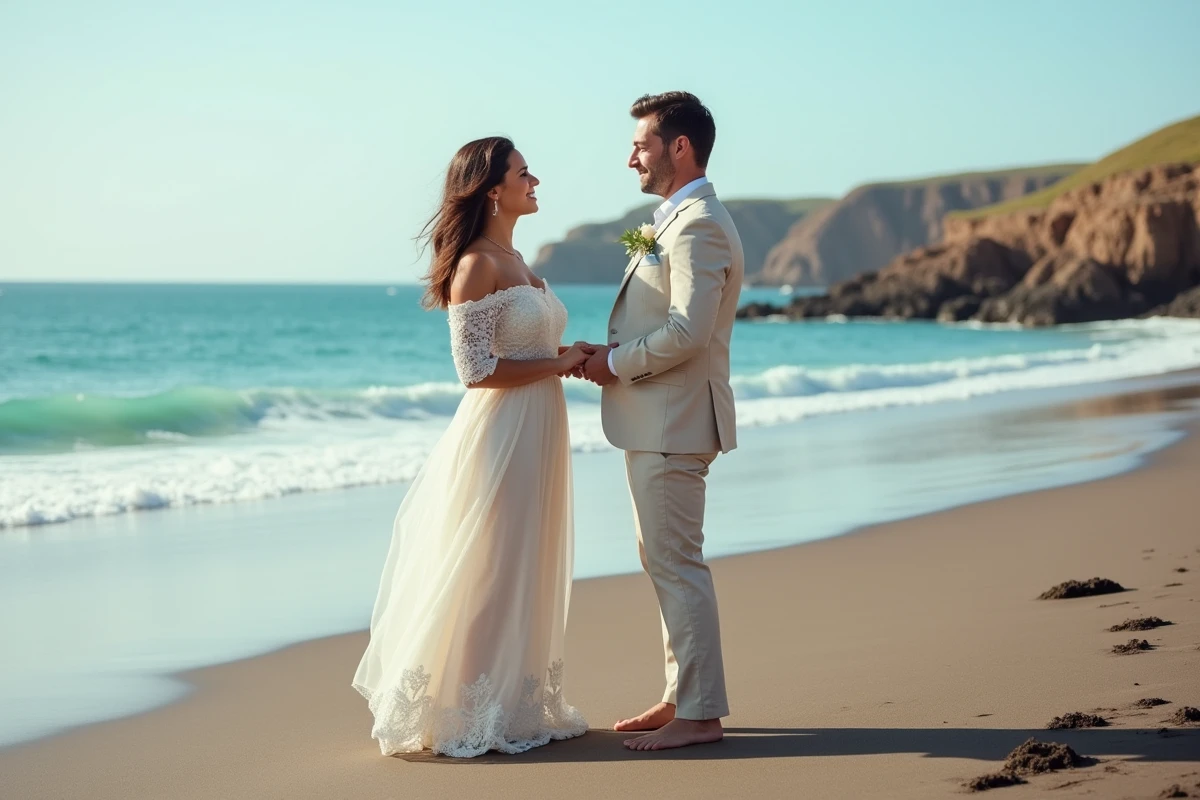
Organizing a wedding in Cape Verde involves choosing between islands with very different profiles, within a legal framework that has recently tightened for foreign nationals. Comparing the administrative, climatic, and logistical constraints of each island allows for an informed choice rather than relying solely on beach photos.
Comparison of Cape Verdean Islands for an Outdoor Wedding
The ten islands of the archipelago are not equal for a ceremony. Three islands concentrate almost all weddings of foreign couples: Sal, Boa Vista, and São Vicente. Their characteristics differ on points that matter on the big day.
| Criteria | Sal | Boa Vista | São Vicente (Mindelo) |
|---|---|---|---|
| Type of setting | White sandy beaches, salt flats | Golden dunes, secluded beaches | Colorful harbor, colonial architecture |
| Air accessibility from France | Frequent direct flights | Seasonal direct flights | Stopover via Sal or Praia |
| Hotel offerings for groups | Wide range, resorts and small hotels | More limited, focused on discreet luxury | Charming hotels, limited capacity |
| Risk of bruma seca (Saharan dust) | High in winter | High in winter | Moderate |
| Atmosphere | Beachy, touristy | Intimate, preserved nature | Cultural, musical |
This table highlights a point often overlooked: Sal and Boa Vista experience episodes of strong winds and Saharan dust during the winter months. The Serviço Nacional de Meteorologia e Geofísica reports an increase in these episodes, which can disrupt a beach ceremony (guest comfort, photo quality, visibility).
For couples wishing to get married in Cape Verde between November and February, São Vicente presents a lower climatic risk, even though the hotel offerings remain more modest there.
Administrative Formalities in Cape Verde: What the Reform Changes for Foreigners
The legal framework in Cape Verde has evolved between 2022 and 2024 as part of the reform of the Lei do Registro Civil. The conservatórias (civil registry offices) now apply stricter requirements that extend timelines if not anticipated.
Apostille and Certified Translation Required
All foreign documents must be legalized or apostilled, then translated by a certified translator. This requirement also applies to European Union nationals, unlike practices in some Portuguese-speaking countries.
The documents involved include the birth certificate, certificate of singleness (or capacity to marry), and a valid ID. Each document must be apostilled individually, which multiplies the steps at the court or court of appeal in France.
Publication of Bans Timeline
Civil marriage in Cape Verde requires the publication of proclamations. The Cape Verdean civil code imposes a timeline between this publication and the ceremony. In practice, foreign couples should expect several weeks between the submission of the complete file and the possible date of celebration.
- Gather apostilled and translated documents at least three months before the desired date to accommodate postal and administrative delays.
- Contact the conservatória of the chosen island directly to confirm local requirements, which may vary from island to island.
- Plan a visit to the French consulate in Praia if the marriage needs to be transcribed into the French civil registry.
Transcription in France is not automatic: it requires a separate request to the consulate, with its own timelines.
Climate and Logistics: Variables That Shift the Best Period
The majority of articles on weddings in Cape Verde recommend the dry season without nuance. Local weather data provides a different perspective.
The rainy season, short but concentrated between August and October, has seen more intense episodes in recent years on certain islands. Organizing an outdoor ceremony during this window exposes one to sudden showers, even if they are brief.
In contrast, the period from March to June combines low rainfall and moderate winds on most islands. This is the window where the risk of bruma seca decreases on Sal and Boa Vista, while avoiding the humid heat of late summer.

Guest Logistics on an Archipelago
Bringing a group to an island requires coordinating inter-island flights, primarily operated by the local airline. Connections are not daily between all islands, and delays or cancellations remain frequent.
For a small wedding, this parameter remains manageable. Beyond twenty guests, centralizing the ceremony and accommodation on a single island greatly simplifies organization. Sal offers the best air connectivity from Europe, making it the most fluid logistical choice for groups.
Religious or Civil Wedding in Cape Verde: Recognition and Validity
Cape Verde recognizes two forms of marriage: civil and religious. Religious marriage, usually Catholic, has legal value as long as it is registered with the civil registry. The free and informed consent of both spouses is a condition of validity, regardless of the type of ceremony.
For a French couple, the Cape Verdean civil marriage is the one that will be transcribed by the consulate. A solely religious marriage, not registered civilly in Cape Verde, cannot be recognized in France.
Two distinct ceremonies remain possible: a civil marriage at the conservatória, followed by a symbolic or religious ceremony on the beach or in a private location. This option allows for separating administrative constraints from the festive moment.
The choice of island, the climatic window, and the administrative preparation form an inseparable triptych. An incomplete file can delay the date by several weeks, and poorly anticipated weather can compromise an outdoor ceremony. Anticipating formalities at least six months before the targeted date remains the most reliable margin to absorb the unexpected of a destination wedding.