
Repainting a facade within the perimeter of the Buildings of France is no simple matter of an improvised brushstroke. Before sketching any color, the Architect of the Buildings of France must validate the choice, even if the shade seems identical to the original. Some villages display a strict palette, while others tolerate slight variations, but always under control. There are instances where a request is rejected, even if the color appears in the local color chart, to preserve the overall coherence.
Ignoring these rules exposes one to administrative sanctions and the obligation to restore the original appearance, regardless of the arguments put forth by the owner.
Why are facade colors strictly regulated by the Buildings of France?
The regulations on authorized colors for the Buildings of France do not come from the whims of a meticulous bureaucrat. They are part of a strong intention: to safeguard the esthetic coherence and visual harmony that characterize the heritage, tell the story, and unite generations. The architects of the Buildings of France do not act as guardians by principle; they ensure the preservation of what makes the places unique: ancient materials, period lines, architectural details.
In protected areas, every detail matters. A facade, a cornice, a hue tells a part of the collective memory. The departmental units of architecture and heritage (UDAP) do not impose their choices randomly: their palettes are designed to align with the local identity and the typology of the buildings. This vigilance extends around historical monuments and in many old centers: even the slightest renovation project is overseen by the ABF’s expert eye. The goal is not to standardize but to preserve balance, avoiding banality or anachronism that would distort the environment.
What happens in case of deviation? A simple out-of-norm brushstroke can be enough to trigger a restoration order, sometimes accompanied by a fine. These rules remind us that the facade of a classified building or one located in a protected area belongs as much to the common history as to its owner. The interventions of the ABF are motivated by transmission: ensuring that each generation can find a part of its past, without freezing the city in mothballs.
Understanding the rules: what the charter says about authorized colors
The official charters, relayed by the local urban planning plan (PLU), strictly frame the choice of authorized colors on facades in protected areas. Here, there is no room for chance or whimsy. The color charts are precise, designed to respect the soul of the places and preserve overall coherence. Colors that are too bright or garish are prohibited: the focus is on mineral shades, stone, earth, sand, or ochre tones, in accordance with the region and the nature of the buildings.
As soon as a renovation or facade modification project is on the horizon, a prior declaration of work is mandatory. It is impossible to change the shade without consulting the architecture and urban planning services. The architects of the Buildings of France (ABF) examine each request: they rely on the charter but also take into account the context, the history of the neighborhood, the materials used, and the architectural rhythms. Nothing is left to chance.
Meeting these requirements helps avoid disruptions, ensures visual harmony, and preserves urban or rural identity. If there is any doubt, it is better to consult the local architecture, urban planning, environment service. Early communication with the authorities facilitates obtaining the green light and limits the risks of blockage during the project.
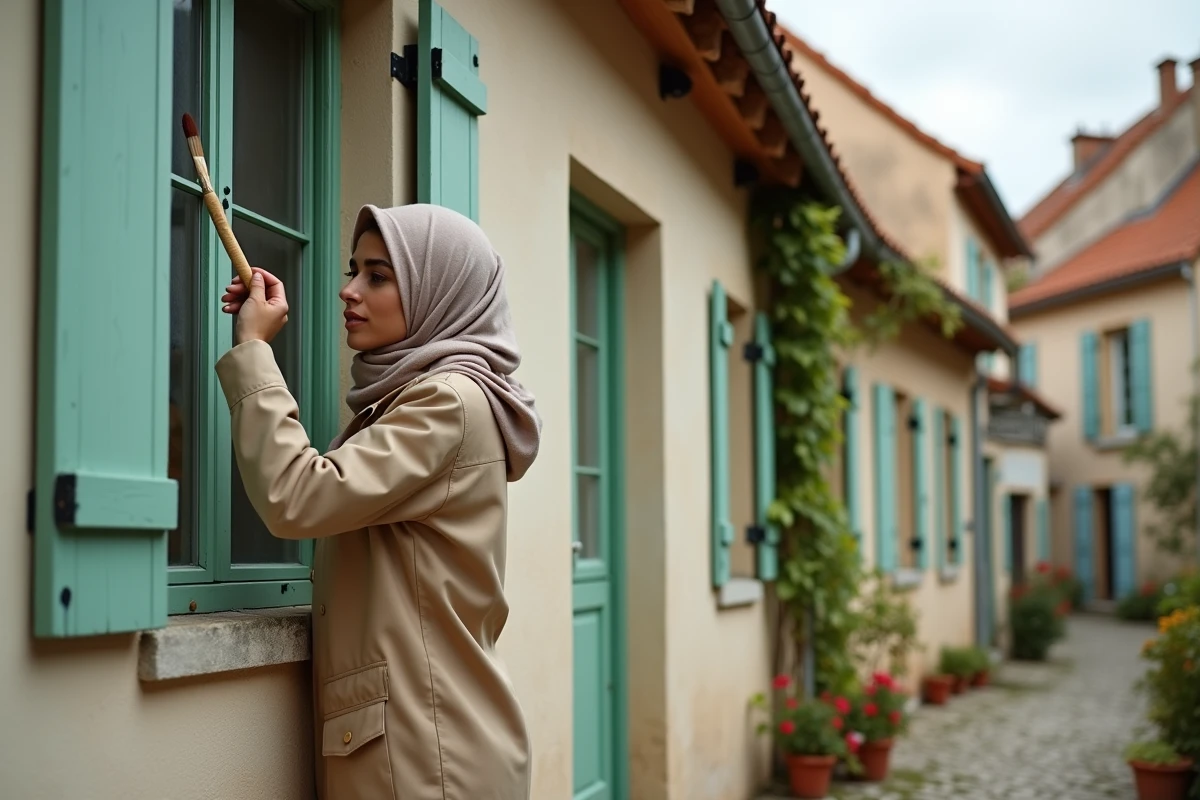
Practical tips for choosing a harmonious shade that complies with your environment
Choosing a color for a facade is an exercise in balance: it involves reconciling your project with the atmosphere of the neighborhood. The color chart provided by the urban planning services offers a solid foundation. It includes shades suitable for each region, directly inspired by the heritage and materials of the area. Shades of stone, ochre, and sand are omnipresent: they embody the esthetic coherence expected in protected areas.
Observe the existing architectural elements. Window frames, shutters, or cornices often set the tone and limit the risks of bad taste. The goal is to avoid overly marked contrasts, favoring sober, natural colors that harmonize with the surrounding heritage.
Before diving in, make an appointment with an architect of the Buildings of France (ABF) or the departmental architecture service. Their perspective can help refine your choice, anticipate potential refusals, and save time. Also, remember to check the requirements of the local urban planning plan: the prior declaration of work remains the rule for any project.
Here are some useful reflexes to approach your project calmly:
- Look around you: examine neighboring facades, rooftops, and the ambiance of the neighborhood.
- Consult the local color chart: each protected sector or perimeter has its own references.
- Build a solid file to present your request to the competent authorities.
Carrying out a renovation or restoration in compliance with the rules is to enjoy the satisfaction of contributing to the beauty of a heritage while ensuring it has a vibrant place in the city of tomorrow.